


What Is the Mind-Body Relationship in Health Psychology?
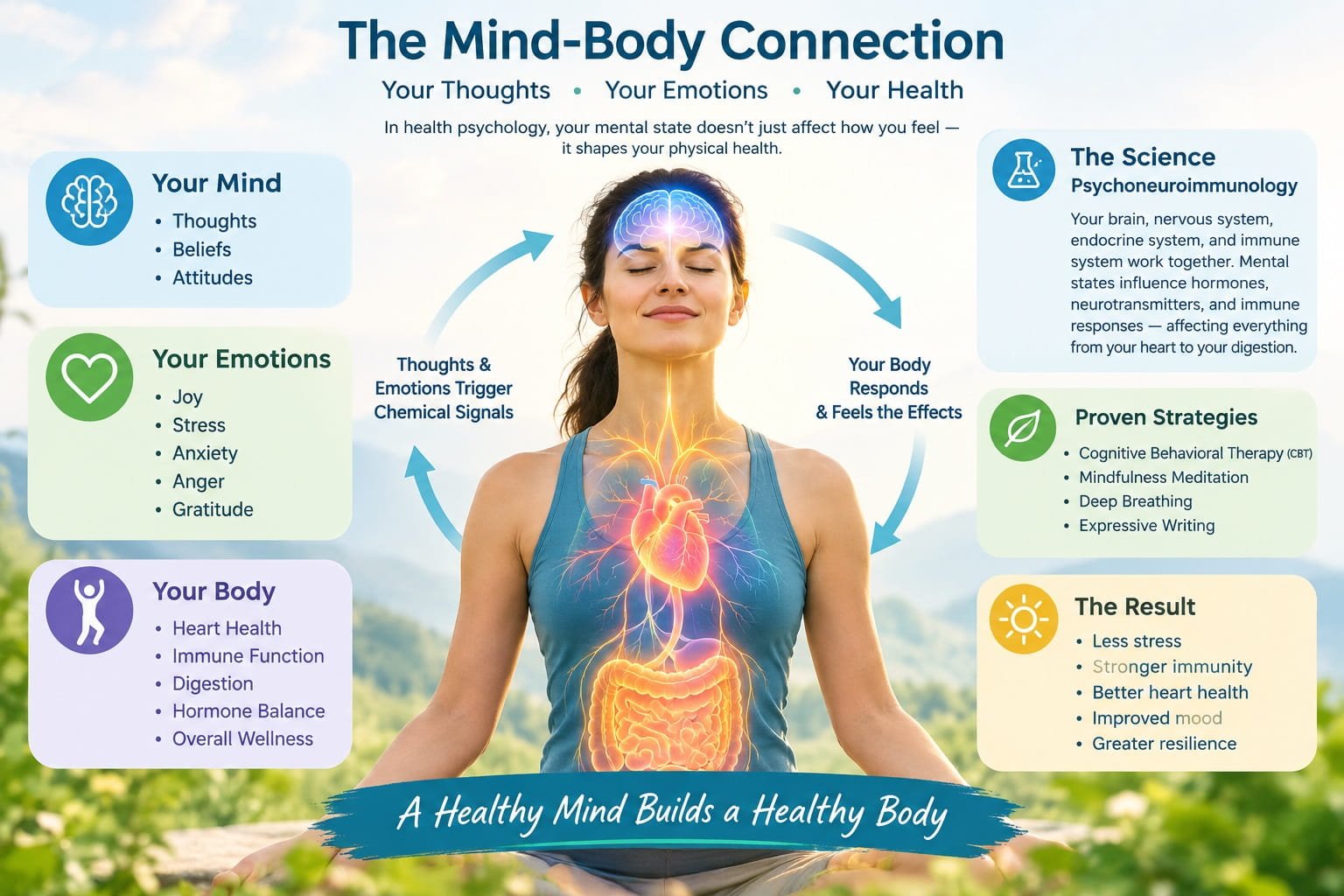
In health psychology, the mind-body relationship refers to the bidirectional communication system between cognitive processes (thoughts, beliefs, and attitudes), emotional states, and physiological function. Rather than viewing the brain as an isolated controller, psychologists and medical researchers view human health through a biopsychosocial model—a framework that integrates biological, psychological, and social factors into healthcare. Organizations such as the American Psychological Association highlight stress as a core pathway linking mental states to physical outcomes.
When you experience a cognitive thought or an emotional reaction, your brain releases a flood of neurotransmitters, hormones, and chemical messengers. These signals travel throughout your nervous system, directly altering heart rate, digestion, gene expression, and immune defenses. Maintaining strong psychosomatic health means recognizing that emotional suffering can manifest as real physical distress, just as bodily illness can degrade mental clarity. This same emotional dynamic often shows up in close relationships—see how psychology explains common relationship myths and emotional flooding.
The Science of Psychoneuroimmunology: How Mental States Affect Immunity
To truly grasp how thoughts and feelings govern bodily function, we must look at psychoneuroimmunology—the scientific term for how mental state affects immunity. This interdisciplinary field studies the complex interplay between the central nervous system, the endocrine system, and the immune system. For accessible guidance on evidence-based mind and body practices, the National Center for Complementary and Integrative Health (NCCIH) is a trusted public resource.
│
▼ (Cortisol & Cytokines)
[ Physical Body ] <──(Immune Suppression)─── [ Immune System Response ]
When you harbor persistent negative thoughts or undergo emotional distress, the brain’s hypothalamus triggers the sympathetic nervous system and the HPA (hypothalamic-pituitary-adrenal) axis. This pathway signals your adrenal glands to release stress hormones like cortisol and adrenaline.
Short-Term vs. Chronic Stress Dynamics
- Short-term stress: Cortisol temporarily boosts immune function and alerts the body to immediate threats.
- Chronic stress: Prolonged elevation of cortisol disrupts cell communication, lowers white blood cell production, and leads to systemic, low-grade inflammation.
Over time, impaired psychoneuroimmunology leaves the body vulnerable to viral infections, delayed wound healing, autoimmune flare-ups, and accelerated cellular aging. Chronic stress also spills into relationships—learn more in our guide on how financial stress can damage couples.
How Thoughts Drive Physical Health Outcomes
Your internal dialogue isn’t just noise in your head; it acts as a blueprint for your body’s physiological environment. The connection between thoughts and health is best observed in the measurable cognitive-behavioral health impacts on daily physiology.
The Power of Cognitive Appraisal
Two people can face the exact same stressful event—such as a job interview or public presentation—and exhibit entirely different bodily reactions based on cognitive appraisal:
- Threat Appraisal: Viewing the situation with fear triggers a spike in blood pressure, heart rate, and inflammatory markers.
- Challenge Appraisal: Viewing the situation as an exciting opportunity releases growth hormones and dilates blood vessels, promoting healthy cardiovascular flow.

The Placebo and Nocebo Effects
The clinical power of belief further illustrates this link:
- The Placebo Effect: When a patient genuinely believes a sugar pill will relieve pain, the brain releases endogenous opioids (endorphins), resulting in physical symptom relief.
- The Nocebo Effect: Expecting a treatment to cause negative side effects frequently causes patients to experience those physical symptoms, purely driven by anticipatory anxiety.
The Biological Link Between Emotions and Health
Just as cognitive thoughts dictate neural pathways, the link between emotions and health dictates systemic bodily responses. Primary emotional states—such as anger, depression, joy, and anxiety—produce distinct chemical profiles. Building emotional resilience matters here; explore the good and bad of resilience for mind and wellbeing.
1. Chronic Anger and Cardiovascular Strain
Frequent outbursts of hostility activate the “fight-or-flight” response, causing blood vessels to constrict and blood pressure to surge. Research consistently correlates high levels of suppressed anger with arterial plaque buildup, raising the long-term risk of heart attacks and strokes.
2. Depression and Systemic Inflammation
Major depressive disorder is closely linked with elevated inflammatory markers, such as C-reactive protein (CRP) and pro-inflammatory cytokines. This persistent inflammatory state compromises metabolic health, increases fatigue, and heightens susceptibility to chronic pain syndromes. Depression also affects partnerships—see how postpartum depression and relationships can heal together for a related perspective on emotional health in couples.
3. Positive Affect and Physiological Repair
Conversely, experiencing positive emotions like gratitude, joy, and optimism triggers the release of dopamine, oxytocin, and serotonin. These neurochemicals lower resting heart rate, reduce systemic stress, and support tissue repair across major organ systems.
Analyzing Stress and Health Outcomes
When evaluating stress and health outcomes, health psychologists emphasize that stress is not merely a feeling; it is a full-body event. The Mayo Clinic’s guide to stress symptoms and management outlines how chronic stress can affect nearly every system in the body. Chronic physiological stress directly contributes to several major chronic conditions:
| Health Category | Impact of Chronic Stress & Negative Emotions | Key Physiological Mechanism |
|---|---|---|
| Cardiovascular Health | Hypertension, arterial stiffening, elevated risk of coronary artery disease | Excess adrenaline constricts blood vessels; elevated cortisol promotes arterial inflammation. |
| Gastrointestinal Health | Irritable Bowel Syndrome (IBS), impaired gut microbiome balance, acid reflux | The gut-brain axis causes stress to disrupt gut motility and alter digestive enzyme secretion. |
| Immune System | Increased risk of chronic infections, sluggish wound healing, reduced vaccine efficacy | High cortisol suppresses lymphocyte (white blood cell) production and blunts immune defense. |
| Metabolic Health | Insulin resistance, central adiposity (abdominal weight gain), type 2 diabetes risk | Prolonged cortisol levels trigger continuous glucose release into the bloodstream. |
The Role of Emotional Well-Being in Physical Health
Cultivating emotional well-being and physical health is not about eliminating negative emotions entirely—it is about developing emotional regulation and psychological resilience.
People who cultivate high emotional intelligence and psychological well-being experience:
- Lower baseline cortisol levels throughout the day
- Enhanced vagal tone (improved heart rate variability and rapid recovery from stress)
- Stronger cellular immunity and longer telomere length (a biomarker of cellular longevity)
- Lower risk of developing chronic age-related metabolic conditions
Understanding the mind-body connection in disease highlights that protecting your mental state is just as vital for disease prevention as maintaining a nutritious diet and regular exercise routine. After emotional injury, recovery work also supports the body—read our guide on how to heal emotionally after a heartbreak.
Evidence-Based Strategies to Enhance Psychosomatic Health
To harness the power of the mind-body relationship for better health, health psychology highlights several proven cognitive and behavioral interventions. For practical daily tools, start with our article on 5 proven techniques for anxiety relief and stress reduction.
1. Cognitive Behavioral Therapy (CBT)
CBT helps individuals identify and reframe distorted, catastrophic thought patterns. By altering how you interpret stressors, CBT directly reduces sympathetic nervous system arousal, lowering blood pressure and chronic inflammation.
2. Mindfulness-Based Stress Reduction (MBSR)
Practicing mindfulness meditation daily reduces activity in the amygdala (the brain’s threat center). MBSR has been shown to lower pro-inflammatory gene expression, improve sleep quality, and ease chronic pain.
3. Deep Diaphragmatic Breathing
Slow, deep belly breathing stimulates the vagus nerve, immediately shifting the body from a sympathetic “fight-or-flight” state into a parasympathetic “rest-and-digest” state. This lowers heart rate and reduces stress hormone circulation within minutes.
4. Expressive Writing and Emotional Release
Suppressing traumatic memories or negative emotions exerts a continuous physical strain on the body. Journaling or speaking openly with a professional facilitates emotional processing, leading to measurable improvements in immune markers.
Reclaiming Your Health Through Mind-Body Awareness
The mind-body relationship in health psychology demonstrates that your physical health is intimately connected to your internal psychological world. By prioritizing emotional well-being and physical health together, you gain a powerful tool for disease prevention and personal vitality.
By restructuring negative thought patterns, processing difficult emotions, and mitigating chronic stress, you actively signal your body to heal, rebuild, and thrive. Integrating psychological wellness into your daily routine isn’t just good for your peace of mind—it is foundational to lifelong physical health.