



Relationship behavior needs show up long before a perfect speech. Missed texts, over-helping, sarcasm, and sudden busyness can all point to longing, fear, or burnout. When couples look beyond words, they stop arguing about the surface issue and start tending the real need.
Why Relationship Behavior Needs Matter More Than Perfect Scripts
Words can be polished while the body tells the truth. Extension educators note that empathic listening includes nonverbal cues and checking whether your read is accurate (USU Extension: social awareness). That skill protects intimacy better than debating who is “right.”

A Simple Path From Behavior to Need
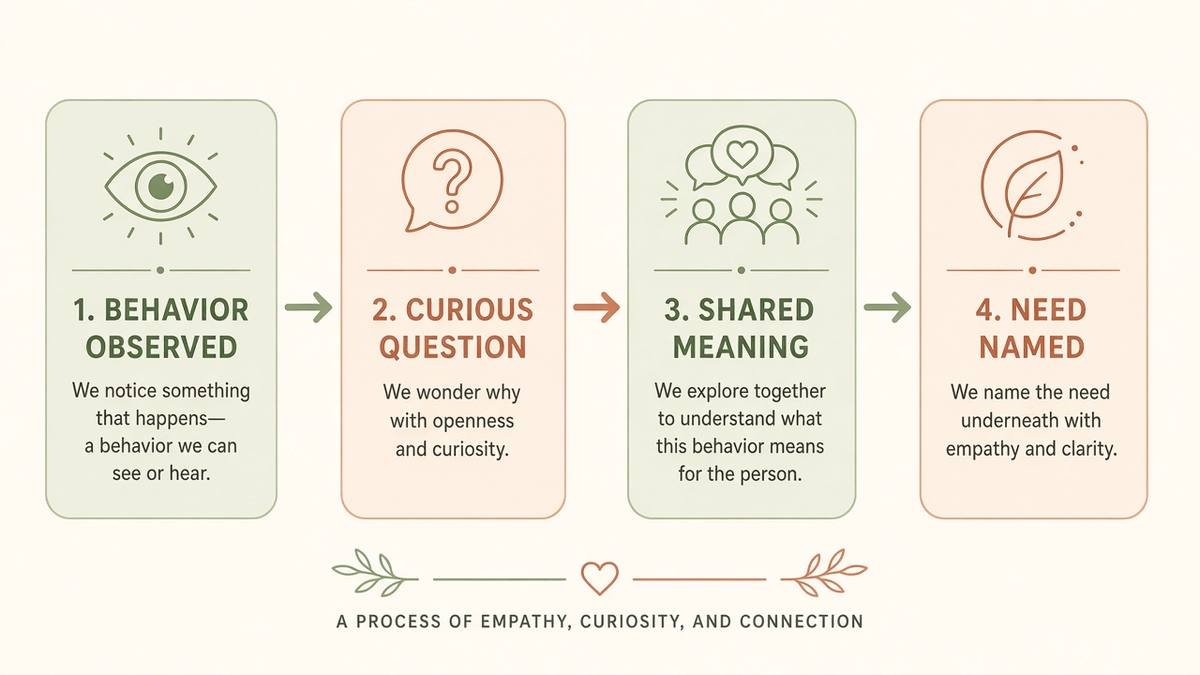
- Observe without a verdict.
- Ask a gentle clarifying question.
- Agree on what the moment meant.
- Name the need: closeness, autonomy, reassurance, rest, respect.
| Surface behavior | Challenge underneath | Need to name |
|---|---|---|
| Checking your phone mid-talk | Distraction or escape from intensity | Regulation and focused time |
| Over-explaining | Fear of being misunderstood | Reassurance and patience |
| Joke-deflecting serious topics | Shame or conflict fear | Safety to be earnest |
| Scorekeeping chores | Feeling unseen | Fairness and appreciation |
Common Challenges Hidden in Everyday Behavior
Withdrawal at the table
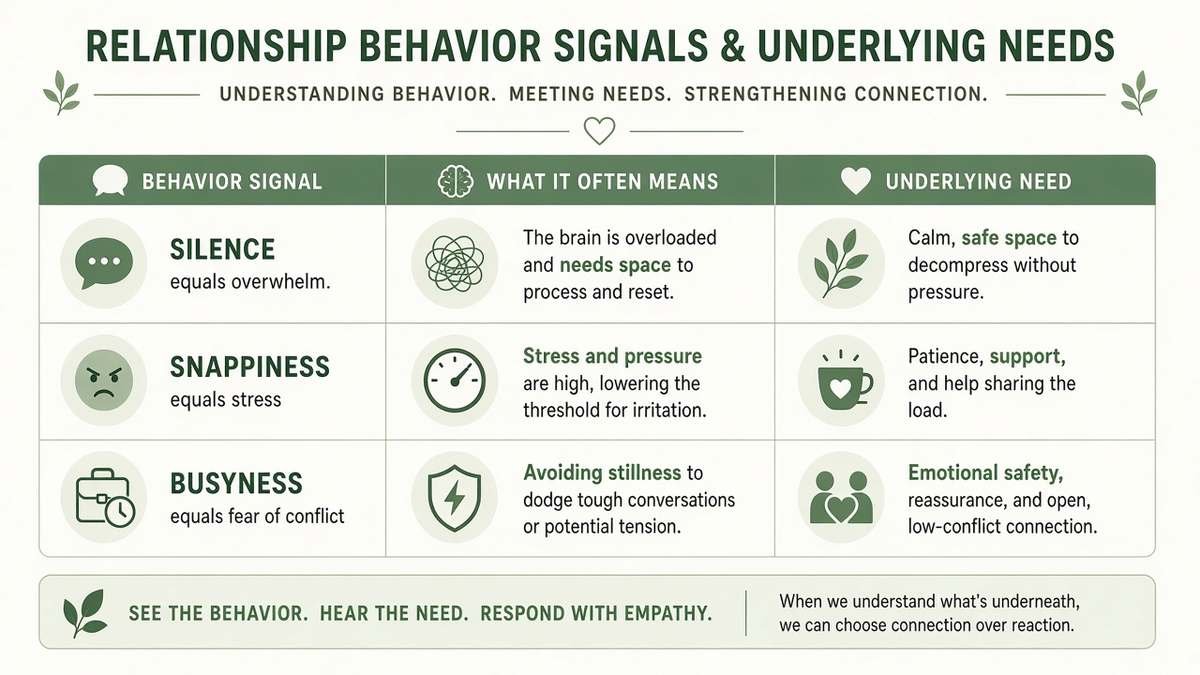
Silence during dinner can mean “I cannot take one more demand,” not “I do not love you.” Ask for a preference: quiet meal now, talk after dishes. That respects capacity and keeps the door open.

Snappiness that seems personal
Irritability is frequently a load problem. Sleep, money pressure, parenting fatigue, and loneliness can leak into tone. APA resources on relationships remind couples that bonds are shaped by repeated daily interaction, not one perfect talk (APA: marriage and relationships).
Why Emotional Intelligence Changes Hard Moments
Emotional intelligence is not about being soft forever. It is about delivering needs without character attacks so your partner can actually hear them.
How Couples Can Respond to Challenges Constructively
Replace “Why are you like this?” with “What is this about?”
The first question shames. The second invites data. Follow with one need of your own: “I need to know we are okay tonight.”
For related skills, read how to know if your relationship has healthy communication and how to express feelings without starting an argument.

Imago Dialogue and Feeling Heard
Structured listening tools help couples slow down enough to hear the need under the behavior, especially after repeated misunderstandings.
Examples of Relationship Behavior Needs in Real Life
Consider a partner who cleans furiously after guests leave. The surface story is tidiness. The relationship behavior need may be calm after social overstimulation, or pride in a shared home, or fear of being judged. Ask which one fits before you debate dustpan technique.
Consider the partner who jokes when tears appear. Humor can be care or avoidance. If jokes arrive every time vulnerability shows up, the challenge is emotional safety. A gentle boundary helps: “I like your humor. Right now I need seriousness for five minutes.” That request turns a confusing behavior into a clear need.
Consider mismatched texting. One person sends paragraphs; the other sends one-word replies. The faster texter may need reassurance. The slower texter may need fewer channels and more face time. Negotiate a rhythm instead of diagnosing each other as needy or cold. Relationship behavior needs become solvable once they are spoken as preferences.
Travel days, illness, and financial shocks amplify signals. Agree in advance how you will check in during stress weeks. A morning voice note and an evening hug can prevent misreads. For stress literacy that still stays relationship-focused, see managing everyday stress in a healthy way.
Finally, review monthly: Which behaviors still confuse us? Which needs are we meeting well? Celebration matters. Couples who only analyze problems forget to notice the quiet successes where needs were met without a fight.
Turning Relationship Behavior Needs Into Clear Requests
Relationship behavior needs stay stuck when couples only describe what they dislike. Move from complaint to request. “Stop ignoring me” is vague. “Can we put phones in a basket during dinner three nights a week?” is doable. Specific requests give your partner a path to succeed.
Some needs compete. One partner needs more affection after stress; the other needs solitude. Name both needs as legitimate. Then design a sequence: twenty minutes alone, then ten minutes of connection. Sequencing beats forcing one person to abandon their regulation style.
Behavior also reveals values. Chronic lateness may signal time blindness or disrespect; only a curious conversation can tell which. Chronic overwork may signal fear of scarcity or identity wrapped in productivity. Looking beyond words keeps you from assigning the worst motive first.
Create a shared vocabulary for states: flooded, lonely, touch-starved, overstimulated, ashamed. When someone says “I am overstimulated,” the other person knows the need is quieter input, not a debate. Vocabulary shrinks conflict time. Pair this with recognizing emotional overwhelm so body cues get named earlier.
Challenges that hide under helpfulness
Over-functioning is a behavior need in disguise. The partner who always plans, reminds, and cleans may need appreciation or fear chaos. The partner who under-functions may feel criticized and helpless. Trade roles for one week as an experiment. Notice what emotions appear when the script flips. Those emotions are data about needs and challenges, not proof that someone is lazy or controlling.
Sexual distance, sarcasm, and sudden busyness can also be protective. Approach with gentleness and consent. If trauma history is involved, professional support may be wiser than DIY interpretation. Curiosity still helps: “I miss closeness. Is there a pace that feels safer?”
Frequently Asked Questions
Do relationship behavior needs mean my partner is manipulating me?
Not necessarily. Many behaviors are automatic stress responses. Manipulation involves intent to control. Look at patterns, accountability, and whether needs can be stated directly.
What if we disagree about what a behavior means?
Treat meaning as a hypothesis. Ask, summarize, and let your partner edit the story.
How do we handle opposing needs, like closeness vs space?
Schedule both: connection time and alone time. Opposing needs are normal in long-term love.
Should we talk about behavior in front of kids?
Keep adult repair private. Kids benefit from seeing respectful tone, not detailed conflict processing.
More help: balancing space and togetherness.