



Partner behavior communication is often louder than the words you hear. A short reply, a slammed cabinet, or a sudden quiet dinner can carry a need for safety, rest, closeness, or respect. When couples treat behavior as information instead of accusation, conflict softens and trust grows.
What Partner Behavior Communication Really Means
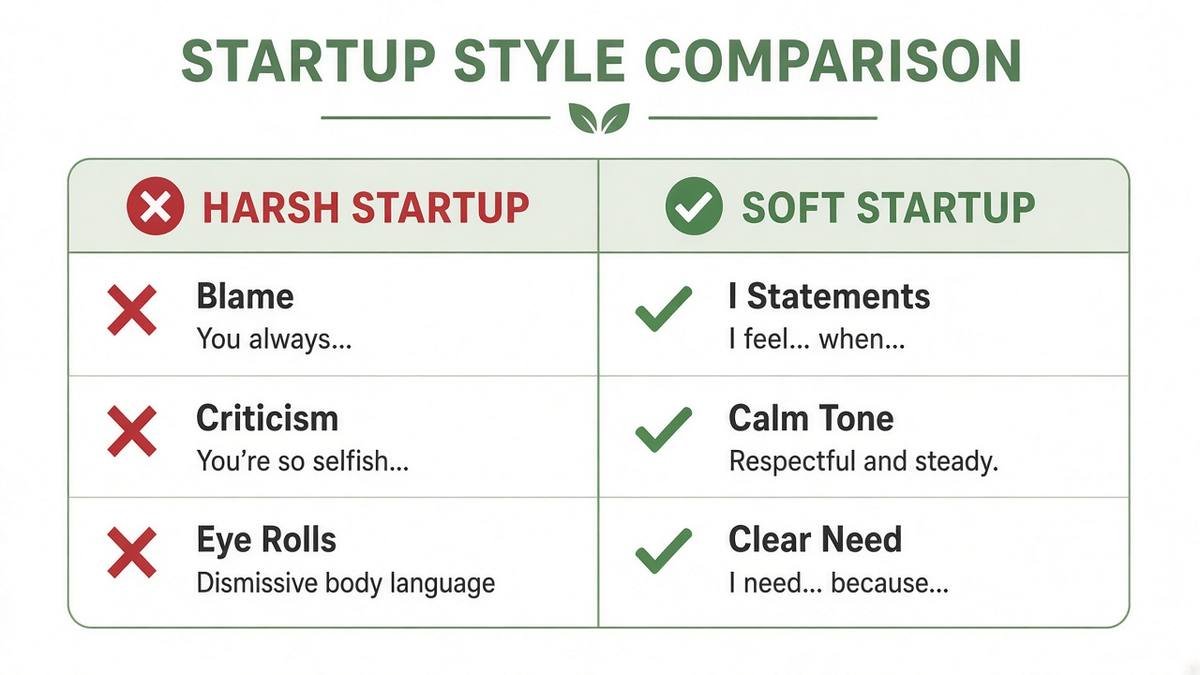
Relationship researchers have long shown that how couples start a hard talk predicts how it ends. Harsh openings with blame tend to keep tension high, while softer openings make repair more likely (Gottman Institute: softening startup). Behavior is part of that opening: eye rolls, sighs, and crossed arms can escalate a room before a sentence finishes.
Stress also changes how people show up. The American Psychological Association notes that stress affects thinking, mood, and behavior (APA: stress). So a snappy tone after a brutal workday may mean overload, not rejection. Curiosity protects the bond better than a courtroom cross-exam.

Signals Couples Often Misread
Not every signal means the same thing in every relationship. Context matters. Still, patterns repeat enough that couples can learn a shared language.
| Behavior you notice | Possible message | Curious response |
|---|---|---|
| Short answers, flat tone | Overwhelmed or afraid of conflict | “You seem quiet. Do you want space or company?” |
| Busy cleaning during talks | Anxiety, avoidance, or need for control | “Can we pause chores and sit for five minutes?” |
| Sudden irritability | Hungry, tired, overstimulated | “Is this about us, or are you maxed out?” |
| Pulling away physically | Flooded nervous system | “I can give you twenty minutes. Want to reconnect after?” |
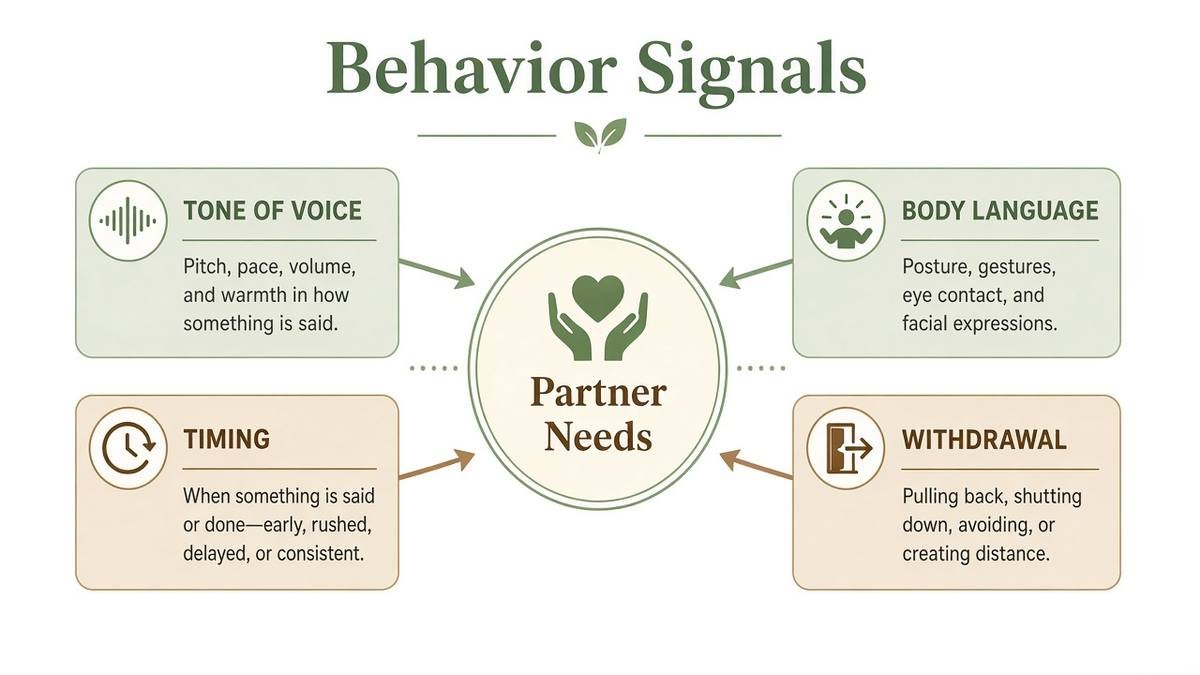
1. Tone carries more weight than content
The same sentence, “We need to talk,” can feel like care or threat depending on pitch and face. Soften your own tone first. If your partner’s tone is sharp, name the effect without diagnosing their character: “I want to hear you, and the sharpness makes me brace.”
2. Body language is a second conversation
Turned shoulders, no eye contact, and clenched jaws often say “I do not feel safe enough to open.” Invite rather than corner. Sitting side by side can feel less confrontational than face-to-face for some couples.

3. Timing is part of the message
Bringing up money at midnight or parenting stress while packing for school can turn a valid need into a fight. Ask for a window: “I have something important. Is after dinner better?” That request is partner behavior communication too: it signals respect.
4. Withdrawal is communication, not absence
Stonewalling and silent treatment hurt, yet many people withdraw because their body is flooded. Gottman research highlights flooding and the value of breaks with a clear return time (Gottman: managing conflict). Agree on a pause phrase before the next storm.
A Short Video on Bids for Connection
Small behaviors are often bids: a sigh, a share about the day, a reach for your hand. Turning toward those bids builds trust over time, which makes harder talks safer later.
How to Respond Without Mind-Reading
- Describe what you see: “You went quiet after I mentioned the weekend.”
- Offer two possibilities: “Are you upset with me, or just drained?”
- Ask what would help in the next ten minutes.
- Reflect the need you heard before solving the logistics.
If you want more structure for hard talks, see our guide on how to talk about relationship problems without fighting and how to stop miscommunication from hurting your relationship.
A weekly behavior check-in
Once a week, each partner answers: What behavior of mine might have been confusing? What did I need that I did not say out loud? Keep it under fifteen minutes. Consistency beats intensity.

How Healthy Couples Fight Differently
Fighting is common. The difference is whether couples can read behavior early, soften startups, and return to each other after tension.
Daily Habits That Improve Partner Behavior Communication
Partner behavior communication gets easier when couples build small daily habits. Start with a two-minute greeting when you reunite: phones down, eye contact, one question about the day. That micro-ritual teaches both of you that bids for connection will be answered. Over weeks, the nervous system learns home is a place of turning toward, not bracing.
Another habit is a nightly debrief without problem-solving. Each person shares a high and a low. The listener only reflects. If a low reveals a need, schedule a later talk instead of fixing it at midnight. This protects sleep and still honors the message inside the behavior.
Watch for “protest behaviors” that look angry but ask for closeness: raised voice after feeling ignored, sarcastic jokes after loneliness, or sudden chores when someone wants help asking for help. Protest is clumsy communication. Meet the longing underneath when you can do so safely.
Also track your own signals. Do you go quiet when ashamed? Do you lecture when scared? Owning your pattern makes it safer for your partner to own theirs. Shared language beats silent scorekeeping. If you need structure for recurring talks, revisit how to talk about your feelings with someone you trust.
When behavior communication becomes chronic conflict
If the same signal leads to the same fight weekly, write a short playbook together. Example: “If I go silent after work, it means I need twenty minutes alone, not that I am angry at you.” Put the playbook on the fridge. Update it monthly. Couples who externalize the pattern fight the pattern instead of each other.
Children and teens also read adult behavior. Tone in the kitchen teaches more than lectures about respect. When you repair after a sharp moment, you model partner behavior communication for the next generation. That modeling is quiet leadership at home.
Frequently Asked Questions
Is partner behavior communication the same as mind-reading?
No. Mind-reading assumes you already know. Partner behavior communication means you notice signals and ask clarifying questions.
What if my partner says nothing is wrong but acts upset?
Gently share the mismatch: “Your words say fine, and your face looks tense. I care either way.” Then give space if they are not ready.
Can behavior ever be ignored?
Urgent safety issues cannot wait. Everyday stress signals can wait for a calmer window, as long as you schedule the talk.
How do we practice this without overanalyzing everything?
Track patterns, not every sigh. Focus on repeats that predict distance or fights.
Explore more on healthy ways to resolve conflict.