




How Financial Stress in Relationships Impacts Canadian Couples: A Complete Guide
Money is widely recognized as a primary catalyst for partnership breakdowns across Canada. In an increasingly high-cost economic landscape, financial stress in relationships takes a heavy toll on couples, damaging active communication, eroding trust, and straining emotional health.
Whether navigating real estate realities in Toronto and Vancouver or managing monthly overhead in regional hubs, learning how financial stress in relationships develops—and how to resolve it—is essential to safeguarding your shared future.
Why Money Strain Triggers Severe Relationship Problems
Finances represent far more than routine transactional obligations; money is tied directly to personal security, autonomy, and long-term stability. When unexpected debt or daily expenses overwhelm a household, financial stress in relationships manifests as persistent arguments, mutual resentment, and emotional distance.

Mismatched Priorities and Goals
When partners hold conflicting money mindsets, minor daily choices compound into structural conflicts. For instance, if one partner prioritizes aggressive savings for a home down payment while the other values lifestyle spending, trust degrades over time without deliberate alignment.
Canadian Statistics: The Scope of Household Financial Stress
Thus, the practical impact of inflation and high living costs across Canadian urban centers directly shapes domestic stability.
Canadian Region / MetricFinancial RealityDirect Relationship ImpactNational Average47% of workers live paycheck to paycheckHeightened anxiety and frequent budget spatsVancouver & TorontoSky-high housing overhead & mortgage ratesDelayed major milestones (housing, family planning)Calgary & PrairiesEnergy market & employment fluctuationsExtended income uncertainty and stressOttawa & MontrealRising cost of living paired with student loansConflict over debt payoff vs. short-term lifestyle
The Psychological Impact of Debt on Couples
Key Takeaway: Emotional detachment caused by financial pressure is rarely about a lack of affection—it is typically a protective response to prolonged economic strain.
Common Conflicts Caused by Money Troubles
- Disagreements Over Spending: Differing views on discretionary expenses versus mandatory savings.
- Financial Infidelity: Concealing debt, secret credit cards, or hidden purchases from a partner.
- Unequal Contributions: Guilt or power imbalances stemming from significant income disparities.
- Debt Repayment Conflicts: Tension over prioritizing aggressive debt payoff over current quality of life.
🚩 Red Flags That Money Problems Are Damaging Your Bond
- Routine discussions about monthly bills turn into personal attacks.
- Complete avoidance of money discussions out of fear of conflict.
- Secret purchases or deliberate hiding of financial statements.
- One partner exercising complete dominance over financial decisions.
- Noticeable reduction in emotional intimacy and physical affection.
Steps to Reduce Financial Stress in Relationships
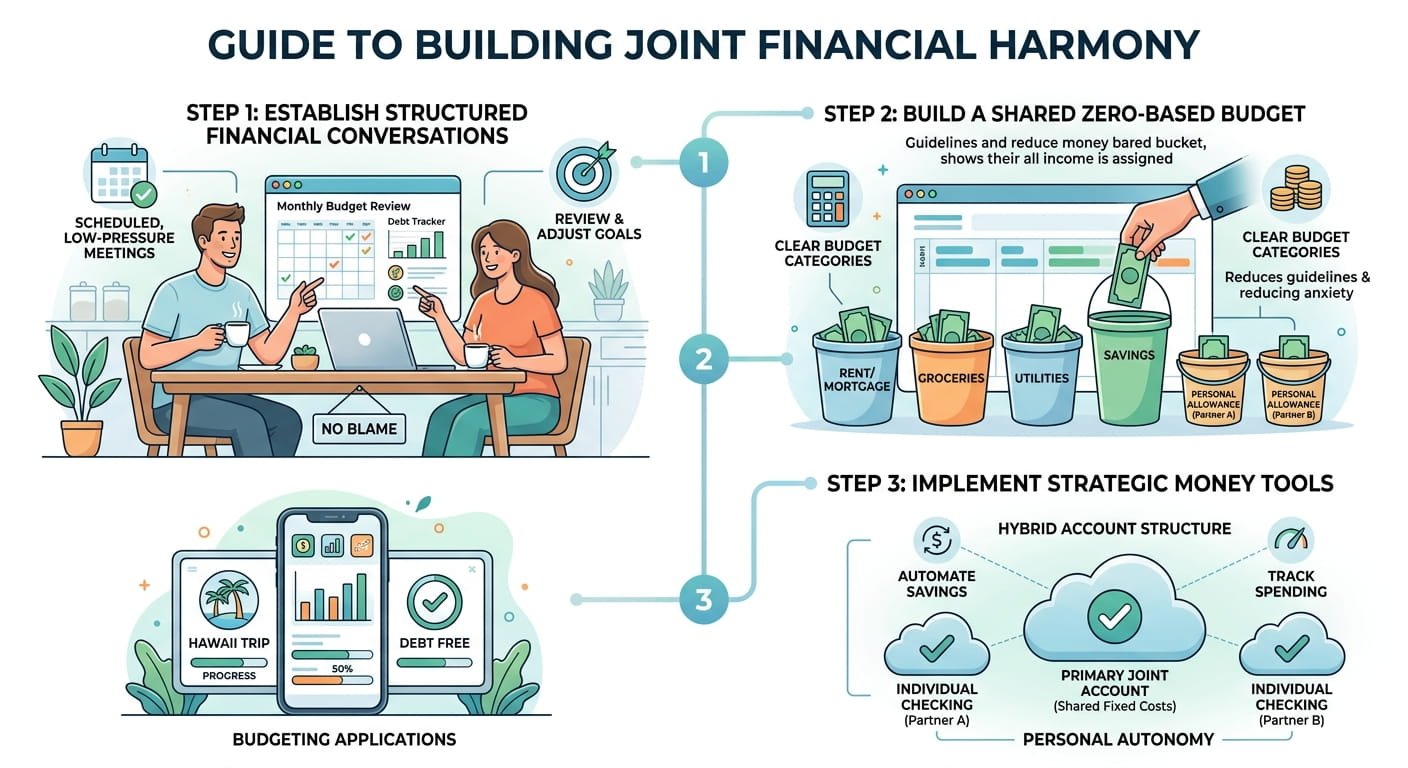
Step 1: Establish Structured Financial Conversations
Step 2: Build a Shared Zero-Based Budget
Step 3: Implement Strategic Money Tools
- Budgeting Applications: Platforms like YNAB or Goodbudget help align daily spending with shared goals.
- Hybrid Account Structure: Maintain a primary joint account for shared fixed costs alongside individual checking accounts for personal autonomy.
The Role of Compatibility and Professional Help
- Financial Therapy: Combines emotional counseling with practical debt management strategies.
- Certified Credit Counseling: Organizations such as the Credit Counseling Society of Canada offer structured debt management plans to relieve immediate stress.




[…] The interplay between togetherness and independence is a delicate dance that can make or break a relationship. In the context of romantic relationships, this balance is crucial for maintaining healthy relationship dynamics. […]
[…] Over time, impaired psychoneuroimmunology leaves the body vulnerable to viral infections, delayed wound healing, autoimmune flare-ups, and accelerated cellular aging. Chronic stress also spills into relationships—learn more in our guide on how financial stress can damage couples. […]