



From bedtime worries to teenage silence, families live inside a stream of feelings that rarely come with neat labels. Emotional communication between parents and children is how those feelings get named, shared, and worked through without shame. When it works, children learn that home is a place where inner experience matters. When it stalls, small problems can grow into distance that lasts years.
What Emotional Communication Includes
Emotions organize attention and action in social life (APA Dictionary: emotion). For children, parents are often the first audience for those signals. Responsive parenting – noticing, naming, and adjusting – helps kids link feelings to words (APA: parenting). That responsiveness overlaps with building emotional trust and daily parent-child communication habits.
Our featured guide emotional communication for stronger parent-child relationships explores similar themes in depth. This article focuses on practical patterns you can notice and adjust at home.

Stages Children Move Through
Early childhood
Kids show feelings through behavior before vocabulary catches up. Adults translate: “You look frustrated because the tower fell.”
School age
Peer stories multiply. Children need help distinguishing their feeling from the group’s story and practicing assertive words.
Adolescence
Identity and privacy intensify. Brief, respectful check-ins beat forced heart-to-hearts. Trust remains the anchor.
Stressful seasons
Moves, divorce, or grief can shrink communication. Predictable routines and extra validation protect connection.
Skills That Keep Channels Open
Validation comes first: acknowledge the feeling before problem-solving. See how to validate a child’s feelings for wording examples. When children freeze, use ideas from talking to a child who says “I don’t know.” Playful practice through emotional communication activities keeps skills alive between hard moments.
During anger, prioritize safety and tone. Escalation teaches kids that big feelings require big threats. Calmer approaches in talking to an angry child protect both message and relationship. Positive parenting tips remind adults to model self-control and praise effort (CDC: positive parenting tips).

Emotional Communication: Helpful Patterns
| Moment | Common trap | Stronger move |
|---|---|---|
| Child cries | “Stop crying” | “Something feels big. I am here.” |
| Bad grade shame | Immediate lecture | Validate embarrassment; plan next step |
| Sibling fight | Picking a winner instantly | Hear each story; teach repair language |
| Withdrawal | Demanding instant talk | Gentle availability; watch warning signs |
When Communication Feels One-Sided
Parents also have feelings that deserve words – without dumping adult burdens on kids. Brief, honest shares (“I had a tough day and need quiet”) teach emotional literacy. If you notice your child still cannot express needs, combine coaching with helping children express their feelings over weeks.
Persistent changes in mood, sleep, or friendships may signal need for evaluation, not only better phrases. Learn baseline guidance on child mental health (NIMH: child and adolescent mental health) and use find help when concerns endure.
Nonverbal Communication Children Read Daily
Children track tone, pace, and facial expression often before they process words. A sigh while saying “I’m listening” sends mixed data. When you are stressed, name it simply so they do not personalize your mood as their fault.
Physical affection can accompany emotional talk for younger kids – a hand on the back, sitting close. Teens may prefer parallel activity. Match gesture to developmental comfort instead of forcing hugs that feel performative.
Household climate matters. Background tension between adults teaches kids to scan for danger even when nobody speaks to them directly. Protect children from adult conflict when possible, and repair visibly when they witness arguments.
Building a Family Emotional Vocabulary
Post feeling words where everyone sees them. Rotate a “word of the week” at dinner and share examples from each person’s day. Books, shows, and news stories become practice material: “What do you think they felt when that happened?”
Normalize mixed emotions: proud and nervous before a recital, happy and jealous when a sibling wins. Mixed labels reduce black-and-white thinking that shuts communication down.
Connect vocabulary work to trust-building habits in building emotional trust so new words are used in safe moments, not only during lectures.
Seasonal Stress and Communication Drift
Holidays, moves, new schools, and grief compress patience. Expect shorter fuses and plan shorter talks. Return to basics: validation, one clear question, reconnect before sleep.
After busy seasons, schedule a low-key family reset – walk, game night, or shared meal without agendas. Reconnection prevents the drift that makes the next hard topic feel impossible to raise.
Conflict as a Communication Lab
Disagreements are inevitable. What matters is whether children learn that conflict can end with understanding. Slow down arguments: one speaker, no insults, time-outs allowed. Name the goal – solve a problem, not win a trial.
After resolution, ask each person what feeling drove their side. That debrief turns fights into data about needs: fairness, rest, belonging, autonomy. Needs language generalizes to school and friendships better than rehearsing who started it.
When you disagree with a co-parent in front of kids, show repair: “We argued, we both care, we found a plan.” Children need templates for healthy disagreement, not silence that pretends adults never clash.
Long-Term Outcomes Worth the Effort
Children who practice emotional communication at home often advocate better with teachers and peers. They may still struggle – no home prevents all pain – but they inherit a map for returning to talk after rupture.
Your consistency today becomes their inner voice tomorrow: “My feeling makes sense. I can find words or ask for help.” That inner voice supports mental health across life, not only childhood.
Single Conversations That Matter
You do not need perfect daily heart-to-hearts. One honest minute at the right moment can reset a week of distance. Watch for bids – a sigh, a hover in the doorway – and respond with presence before content. Bids answered build a track record that hard topics can land later. Over years, those answered bids become the memory your child carries into their own future relationships. That memory is one of the most durable gifts emotional communication offers.

Video: Emotional Communication in Everyday Family Life
Replace the placeholder below with your chosen video embed.
Final Thoughts
Emotional communication between parents and children is a living skill, not a one-time talk. Validate first, listen in short reliable bursts, repair quickly, and practice through play. Over years, those choices tell your child their inner world has a welcome place in your family story. Keep adjusting as they grow; the conversation never finishes, it evolves.
Go deeper on Love SupportsBrowse Parenting and Relationships for guides that support your family’s emotional language at every age.
Frequently Asked Questions
Is emotional communication the same as being permissive?
No. You can validate feelings while holding firm boundaries. “You are mad about the limit, and bedtime is still 9 p.m.”
What if emotions were ignored in my upbringing?
Many adults learn alongside their children. Start small, use books or therapy, and celebrate progress without demanding perfection.
How do screens affect emotional talk?
Devices can delay cues you would otherwise notice. Protected screen-free windows help you catch feelings earlier.
Should both parents communicate the same way?
Styles can differ if both show respect and consistency on safety and privacy. Align on core messages when possible.
When is professional support warranted?
When communication shuts down for weeks, aggression rises, or functioning drops at school or home, consult qualified providers early.


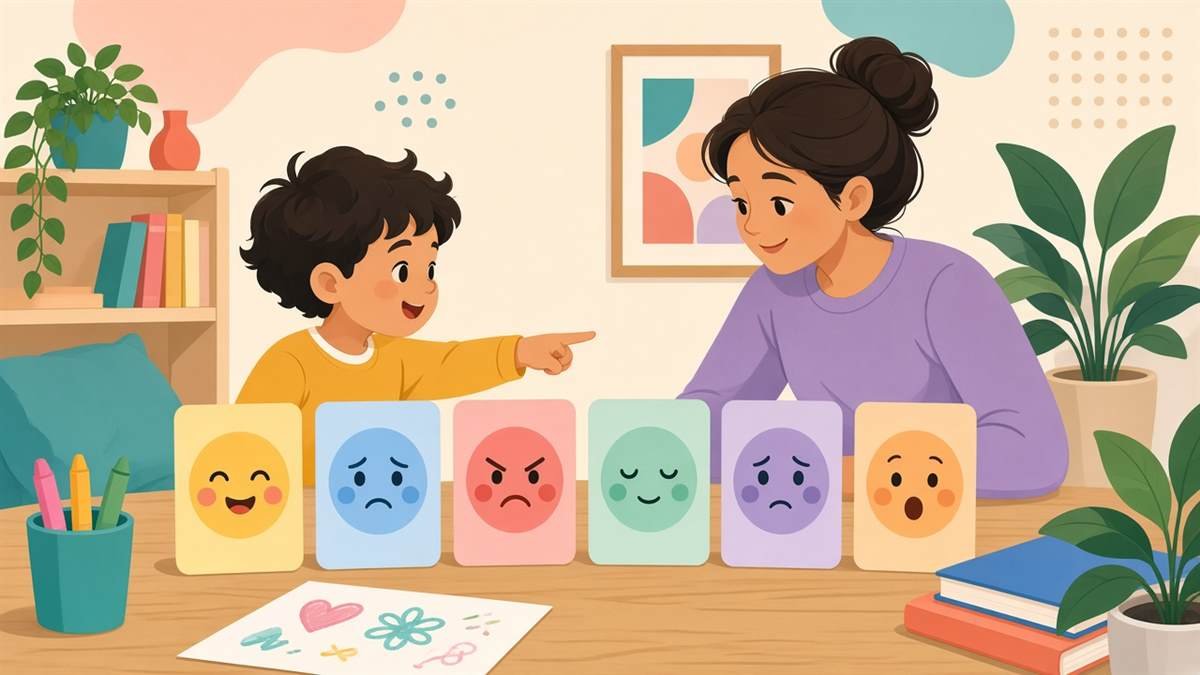

[…] supports skill growth (APA: parenting). Expression flourishes when emotional trust and steady emotional communication are already in […]