



Children are not born with a full feelings vocabulary. They learn it from adults who notice, name, and make room for expression – even when the timing is inconvenient. How parents can help children express their feelings spans everyday coaching, creative outlets, and boundaries that keep talk safe. The goal is not constant confession. It is helping your child know what they feel and choose words (or other channels) before emotions explode or disappear.
Expression Is a Skill, Not a Personality Trait
Emotion connects body, mind, and social context (APA Dictionary: emotion). Parenting that mixes warmth and structure supports skill growth (APA: parenting). Expression flourishes when emotional trust and steady emotional communication are already in motion.
Start from validation – see how to validate a child’s feelings – then teach words, stories, and routines. If talk stalls, combine approaches from talking to a child who says “I don’t know” with playful communication activities.

Coaching Tools That Work at Different Ages
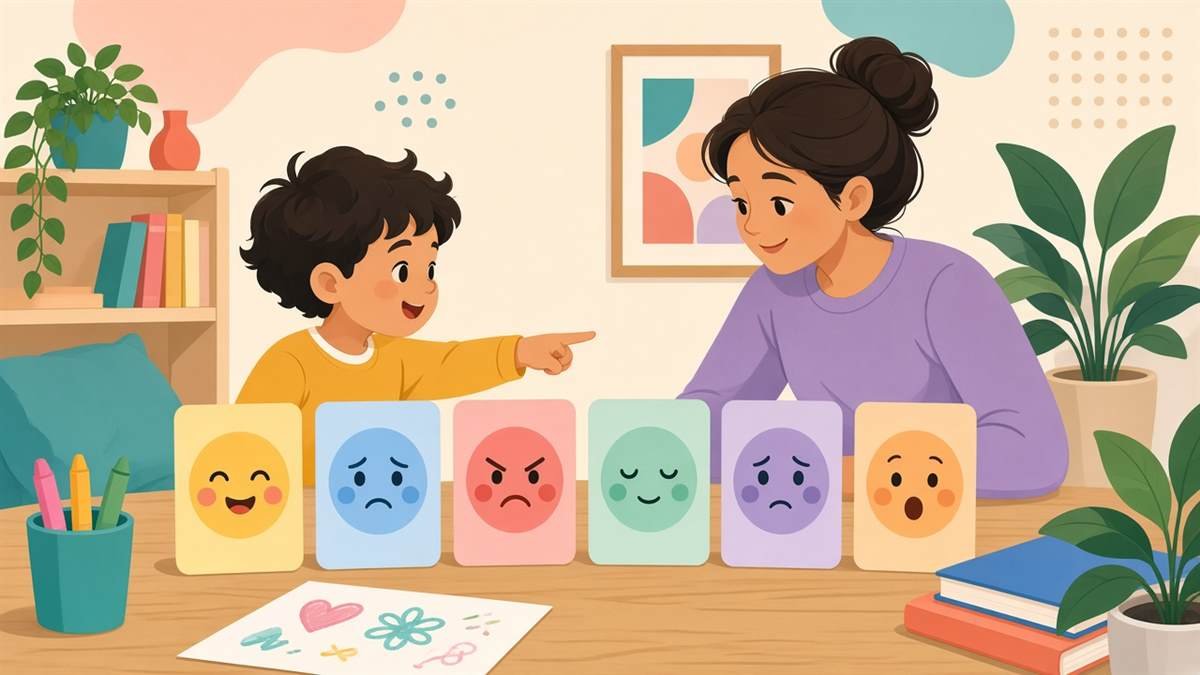
Name and normalize
Label feelings you see: “Your shoulders are tight – maybe worried?” Normalizing reduces shame.
Offer format choices
Talk, draw, write, or walk. Choice increases buy-in for reluctant sharers.
Teach I-statements simply
“I feel ___ when ___ because ___. I need ___.” Model with your own mild frustrations.
Debrief after calm
After meltdowns, review one feeling and one wish. Link to angry-child talk strategies.
Daily Routines That Invite Expression
Build micro check-ins into meals, drives, or bedtime. Use open prompts from improving parent-child communication: “What felt unfair today?” Keep sessions short so they do not feel like interviews. Praise brave shares, not only happy ones.
Create a family “feelings board” or journal jar. Rotate who reads entries if privacy allows. Positive parenting guidance encourages consistent connection rituals (CDC: positive parenting tips). Tie routines to bigger ideas in emotional communication for stronger relationships.

Expression Supports and Common Blocks
| Block | What it looks like | Parent response |
|---|---|---|
| Fear of punishment | Lies, minimization | Separate discipline from feeling talk; validate first |
| Overload | Shutdown, monosyllables | Reduce questions; return later; watch warning signs |
| Perfectionism | “I should not feel this” | Model mixed feelings; praise honesty |
| Peer pressure | Mocking feelings as weak | Affirm courage to speak; discuss friend choices |
When Extra Support Makes Sense
Some children need speech-language, occupational, or mental health support to express and regulate. School teams or pediatricians can coordinate evaluations. Persistent mood changes, self-harm, or aggression warrant prompt attention (NIMH: child and adolescent mental health). Use NIMH find help to locate services.
Expression coaching works best as a family culture shift, not a one-week project. Celebrate incremental wins: a new feeling word, a shorter meltdown, a note slipped under your door. Those signals show the inner world is finding its way out safely.
From Body Signals to Words
Help children scan bodies before vocabulary: tight chest, buzzy legs, hot face. Link signals to possible feelings without certainty: “Maybe worried or excited – both can feel buzzy.” Body literacy reduces meltdowns that come from unrecognized sensation.
Use scaling questions: “If mad is ten, where are you now?” Scales give partial language when story words fail. Follow with one small need: water, quiet, hug, or space.
Creative and Digital Expression
Art, music, and movement express what sentences cannot yet hold. Create a playlist for different moods together. Photo journals document good days without forced talk. Respect privacy settings on teen accounts while keeping safety agreements clear.
Shared documents or voice memos let reluctant speakers draft thoughts asynchronously. Read or listen when calm, then respond with validation before guidance.
Family Agreements That Protect Expression
Write simple rules: no mocking feelings, no sharing private stories without permission, breaks are allowed. Post them lightly – not as threats, as team norms. Revisit quarterly as children mature.
When expression includes criticism of you, breathe before defending. Thank them for honesty when tone is respectful. Defensiveness teaches children to edit heavily next time.
Link agreements to trust habits in building emotional trust so expression is not punished when content is hard to hear.
Helping Children Express Big Feelings Safely
Teach safe release: rip paper, punch a pillow, run laps, scream into a towel. Safe expression prevents unsafe action. Debrief after release to connect body calm with words.
Role-play asking for help: “I need a break before I say something mean.” Practice in calm moments so the phrase exists under stress.
Expression Through Story and Media
After movies or books, ask which character felt most like them this week. Story distance makes honesty easier. Create family stories with stuffed animals acting out mild conflicts and repairs.
Encourage letters that never get sent – to a friend, former teacher, or even future self. Unsent letters organize emotion without immediate social risk.
Celebrating Expression Without Fixing Everything
When a child finally shares, resist instant problem-solving. Ask: “Do you want comfort, ideas, or just listening?” Honoring their choice increases the odds they return tomorrow with more words.
Notice expression in nonverbal gifts – a drawing left on your desk, a chore done without asking. Comment on the care you see: “This felt like a thank-you without words.”
Patience With Slow Progress
Some children add one new feeling word per month. That pace is still progress. Compare them to their past self, not to siblings or social media ideals. Steady encouragement plus communication activities compounds over years into fluency you cannot rush in a single weekend workshop. Note progress in a private log so you remember gains on days that feel stuck again. Logs also help therapists or teachers see patterns without relying on crisis-week memories alone.
When expression stalls, return to the simplest channel that ever worked – a walk, a doodle, a thumbs-up or thumbs-down at dinner. Familiar doors reopen talk faster than brand-new techniques introduced during stress.

Expression During Life Changes
Moves, new schools, divorce, or loss compress language for everyone. Expect regression in expression skills during transitions. Increase validation, reduce demands for long talks, and maintain familiar rituals until the new normal settles. Expression usually returns when safety returns.
Video: Helping Kids Put Feelings Into Words
Replace the placeholder below with your chosen video embed.
Final Thoughts
Helping children express feelings is slow, repetitive, rewarding work. Validate first, offer formats, practice in low-stakes moments, and hold limits with warmth. Over time, your child learns that emotions belong in the conversation – not only in slammed doors or silent retreats. Trust the slow days; they still move your family toward clearer, kinder talk.
More expression and parenting guidesExplore Parenting and Relationships on Love Supports for tools that grow with your family.
Frequently Asked Questions
What if my child only expresses feelings through behavior?
Translate behavior into feeling guesses and teach words alongside. Behavior plans work better after validation.
Should I push my child to share with extended family?
Follow your child’s privacy comfort. Forced sharing can reduce trust at home.
Are feeling charts too childish for tweens?
Adapt tools – mood apps, music playlists, or sport metaphors – to their style.
How do I express my own feelings without burdening my child?
Share age-appropriate, brief examples and show how you cope. Save adult processing for friends or therapists.
When is therapy helpful for expression?
When shutdown or outbursts persist despite consistent coaching, or when trauma is involved. Early therapy often teaches family-wide skills.



[…] emotional literacy. If you notice your child still cannot express needs, combine coaching with helping children express their feelings over […]