



5 Toxic Relationship Myths That Are Quietly Sabotaging Your Love Life (And What Science Says Instead)
Every culture inherits a playbook for romance. Passed down through well-meaning family advice, Hollywood tropes, and social media trends, these unwritten rules promise a roadmap to lifelong bliss.
However, much of this conventional wisdom is built on outdated psychology and unrealistic expectations. When couples treat these cultural scripts as ultimate truths, they inadvertently create friction, anxiety, and unnecessary breakups.
To build a resilient, long-lasting partnership in the modern era, you must separate romantic fantasy from psychological reality. Here are five deeply embedded relationship myths that refuse to go away—and the practical, evidence-based truths you should adopt instead.
Myth 1: “Never Go to Bed Angry”
For generations, newlyweds have been told never to sleep on an unresolved argument. The logic seems sound on the surface: leaving a disagreement unsettled overnight might allow resentment to fester, creating a permanent rift between partners.
The Reality: Late-Night Conflict Causes Escalation
When you force a resolution at 1:00 AM, you are fighting against human biology. Emotional conflict triggers the fight-or-flight response, flooding your system with stress hormones like cortisol and adrenaline. Physical indicators of emotional flooding include:
-
Elevated heart rate (exceeding 100 beats per minute)
-
Shallow breathing and muscle tension
-
Reduced blood flow to the prefrontal cortex (the brain region responsible for logic, empathy, and emotional regulation)
Trying to resolve a complex interpersonal issue in a state of physical exhaustion and high physiological arousal almost always leads to hurtful statements, defensiveness, or emotional stonewalling.
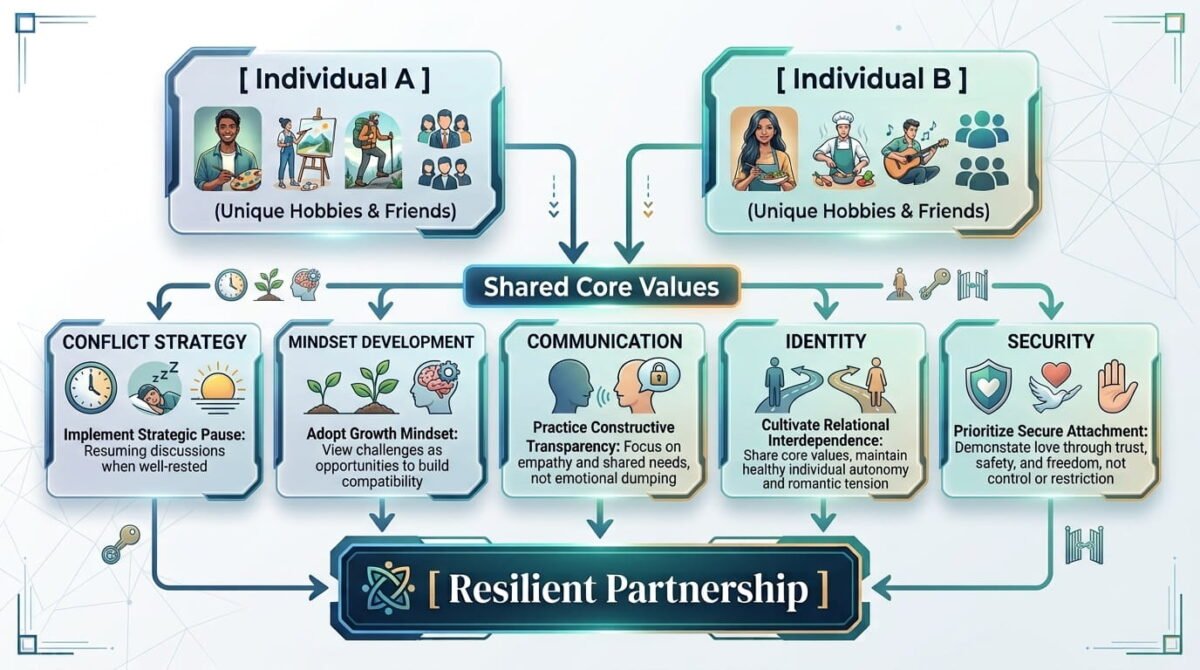
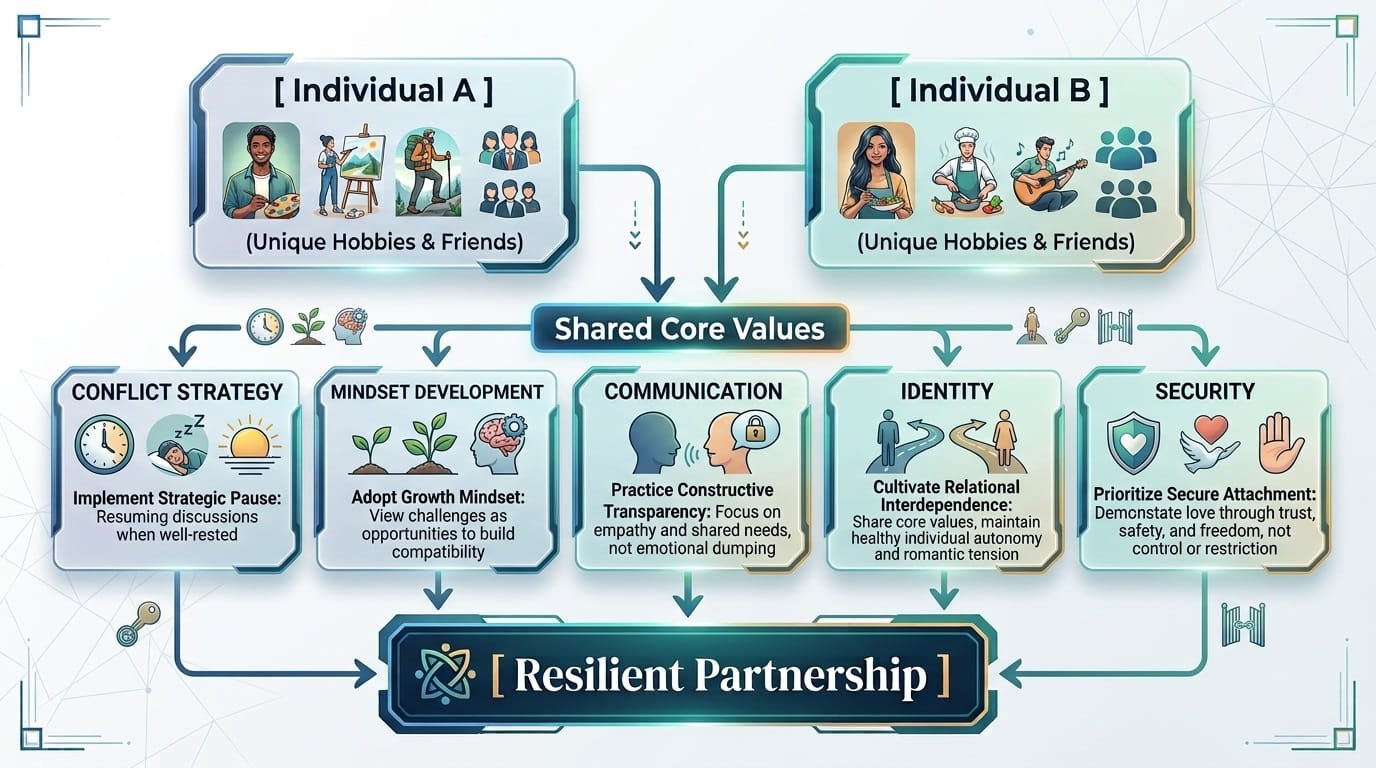
The Modern Fix: Implement a Strategic Pause
Instead of forcing a late-night resolution, agree to hit pause. Acknowledge the issue, reassure your partner of your commitment to the relationship, and schedule a specific time the following day to revisit the conversation.
A good night’s sleep allows your nervous system to reset, processing emotional data through REM sleep. In the morning, both partners approach the discussion with lower stress levels, improved cognitive function, and significantly higher empathy.
Myth 2: “If It Requires Hard Work, You’re With the Wrong Person”
Pop culture frequently depicts real love as effortless. The narrative suggests that when you meet your “soulmate,” communication flows seamlessly, boundaries align automatically, and conflict vanishes. Consequently, when everyday friction occurs, partners often interpret the effort required as a clear sign of incompatibility.
The Reality: Compatibility Is Built, Not Stumbled Upon
Expecting a relationship to thrive without deliberate effort is like expecting a elite athlete to perform without training. While initial attraction and core alignment may feel effortless, sustaining a shared life over decades requires continuous skill development.
Long-term relationships naturally encounter systemic stressors, including:
-
Career transitions and financial reallocations
-
Parenting demands and changing family dynamics
-
Aging, illness, and personal identity shifts
Friction during these transitions is not evidence of a flawed match; it is an inevitable byproduct of two distinct individuals merging their lives.
The Modern Fix: Transition from “Destiny” to “Growth” Mindsets
Psychological research differentiates between a destiny mindset (believing relationships are either meant to be or not) and a growth mindset (believing relationships are developed through effort and learning).
Couples with a growth mindset view challenges as opportunities to strengthen their bond. They invest time in learning active listening techniques, navigating conflict constructively, and regularly recalibrating their shared goals. Effort is not a symptom of a broken connection—it is the exact mechanism that keeps a partnership alive.
Myth 3: “Complete Honesty Means Sharing Every Unfiltered Thought”
Transparency is universally recognized as a foundational pillar of trust. However, many individuals conflate healthy vulnerability with “radical honesty”—the belief that love requires expressing every fleeting thought, past comparison, or critical opinion without filter.
The Reality: Unfiltered Honesty Can Be Emotional Cruelty
There is a significant difference between structural transparency (honesty about your feelings, boundaries, history, and actions) and emotional dumping. Sharing every minor irritation or comparing your current partner unfavorably to an ex-partner under the guise of “just being honest” creates unnecessary emotional trauma.
Crucial distinctions to consider include:
| Type of Communication | Characteristics | Impact on Relationship |
| Constructive Transparency | Intentional, empathetic, focused on personal needs and shared growth. | Builds deep trust, emotional safety, and intimacy. |
| Unfiltered Honesty | Impulsive, critical, focused on personal venting without emotional regulation. | Erodes self-esteem, triggers defensiveness, and creates emotional distance. |
The Modern Fix: Filter Expression Through Kindness and Tact
Before sharing a harsh or critical observation, apply the classic emotional intelligence filter: Is it true? Is it necessary? Is it kind?
Authenticity does not require the elimination of tact. You can remain completely honest about your core needs and values while choosing soft start-ups, considerate language, and appropriate timing for sensitive discussions.
Myth 4: “Happy Couples Share the Same Hobbies and Interests”
A prevalent dating belief is that romantic partners must be best friends who enjoy doing everything together. When one partner loves wilderness camping and the other prefers art galleries, anxiety often arises over whether they are growing apart.
The Reality: Co-Dependency Erode Desire
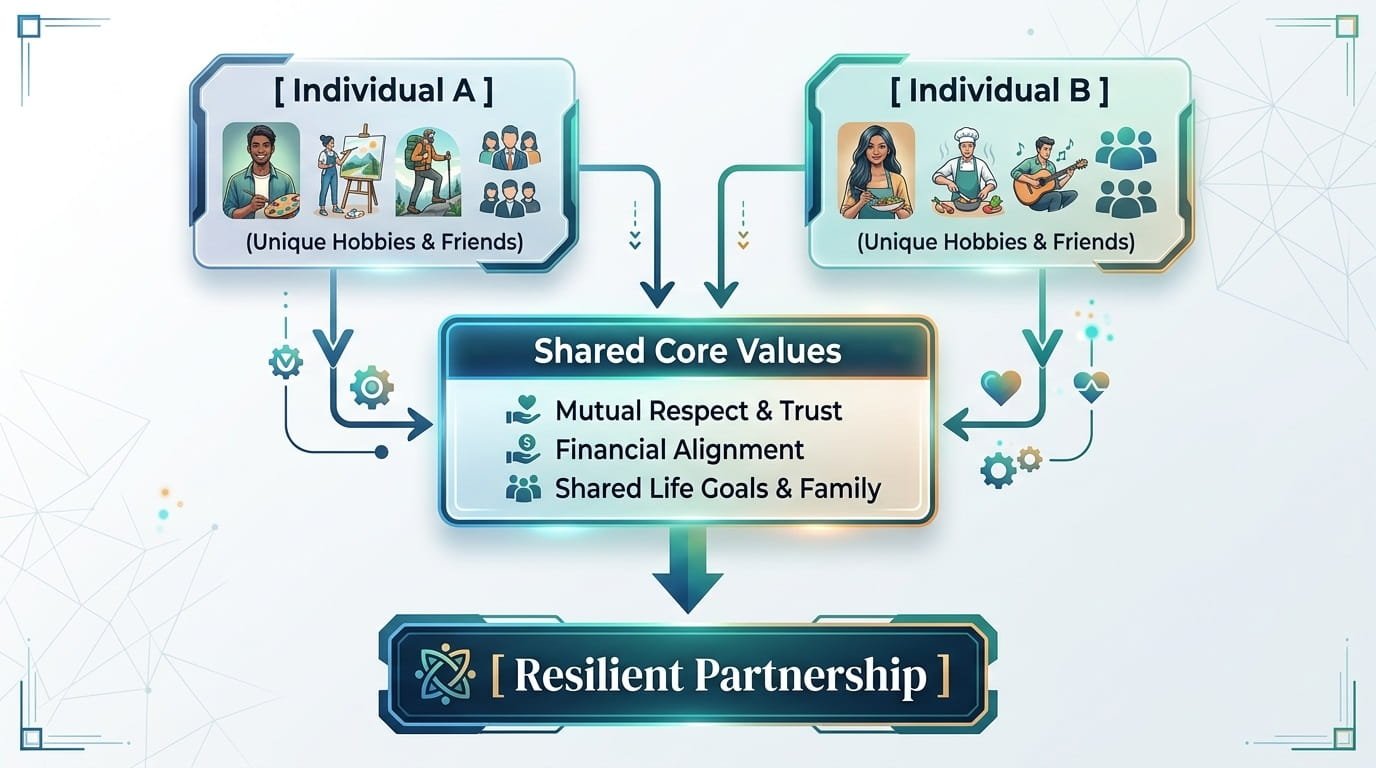
While having foundational alignment on major life values is crucial, sharing identical leisure activities is entirely unnecessary for relationship satisfaction. In fact, forcing yourself to participate in hobbies you dislike solely to be near your partner can generate latent resentment.
Furthermore, relationship dynamics require a balance of closeness and autonomy. When partners lose their individual identity, the healthy tension that fuels romantic intrigue often dissipates.
The Modern Fix: Cultivate Relational Interdependence
Focus on value alignment rather than hobby overlap. What holds couples together over 30, 40, or 50 years is not a shared love for golf or sci-fi movies, but shared principles regarding:
-
How you treat each other during moments of stress.
-
How you manage joint finances and long-term security.
-
How you support each other’s personal autonomy and career aspirations.
Encourage your partner to pursue their passions independently. Maintaining separate interests gives you distinct experiences to bring back to the relationship, fueling fresh conversation and mutual admiration.
Myth 5: “Jealousy Is a Measure of Passion and Love”
Media often romanticizes possessiveness, framing jealousy as proof that a partner deeply cares. Phrases like “if they weren’t jealous, they wouldn’t care if they lost you” perpetuate the idea that anxiety and control are valid expressions of love.
The Reality: Jealousy Reflects Internal Insecurity, Not Devotion
Jealousy is rarely an indicator of how much someone values their partner. Instead, chronic jealousy usually stems from:
-
Unresolved attachment anxiety or fear of abandonment
-
Personal insecurity and low self-esteem
-
Past unaddressed betrayals in previous relationships
-
A desire for control over another person’s behavior
When romanticized, jealousy rapidly escalates into boundary violations, invasive monitoring, and emotional volatility—environments where healthy love cannot survive.
The Modern Fix: Replace Control with Secure Attachment
In a secure relationship, love is demonstrated through trust, safety, and freedom—not restriction. Secure partners do not monitor each other’s phones or view outside friendships as threats. They recognize that real commitment is a daily, voluntary choice.
If jealousy arises, address it as an internal feeling requiring personal reflection or open, non-accusatory communication, rather than using it as a justification to restrict your partner’s autonomy.
Summary: Modern Partnership Framework
To summarize how to transition away from these persistent myths, review the framework below:
-
Old Myth: Never go to bed angry.
Science-Backed Truth: Take a strategic pause when emotionally flooded; resume discussions when well-rested.
-
Old Myth: Real love is effortless.
Science-Backed Truth: Relationships require a growth mindset, intentional skill-building, and proactive care.
-
Old Myth: Radical honesty means saying everything.
Science-Backed Truth: True intimacy balances honesty with emotional regulation, kindness, and tact.
-
Old Myth: Couples must do everything together.
Science-Backed Truth: Shared values matter; individual hobbies maintain healthy autonomy and romantic tension.
-
Old Myth: Jealousy proves how much they care.
Science-Backed Truth: Security and freedom are the true hallmarks of mature, long-lasting love.
By actively dismantling these cultural fictions, you free your relationship from unrealistic standards and create space for a authentic, resilient, and deeply satisfying partnership.
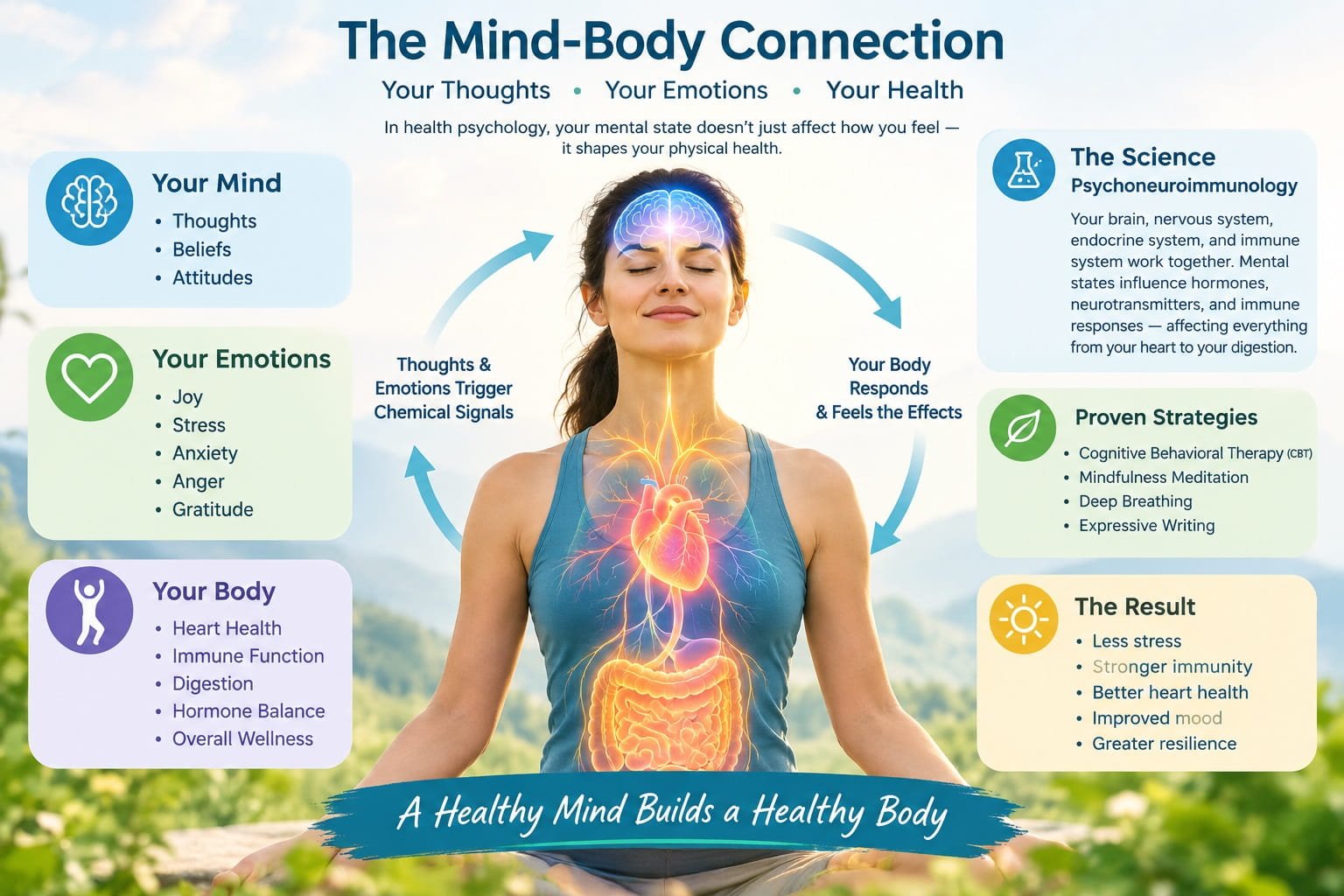


[…] When you experience a cognitive thought or an emotional reaction, your brain releases a flood of neurotransmitters, hormones, and chemical messengers. These signals travel throughout your nervous system, directly altering heart rate, digestion, gene expression, and immune defenses. Maintaining strong psychosomatic health means recognizing that emotional suffering can manifest as real physical distress, just as bodily illness can degrade mental clarity. This same emotional dynamic often shows up in close relationships—see how psychology explains common relationship myths and emotional flooding. […]