


The Painful Reality of Choosing the Wrong Person
Finding the right partner can be one of the most meaningful experiences in life, but it can also bring pain, confusion, disappointment, and loneliness. You may be a caring, loyal, and honest person who genuinely wants love, yet repeatedly find yourself in relationships that leave you feeling hurt or uncertain.
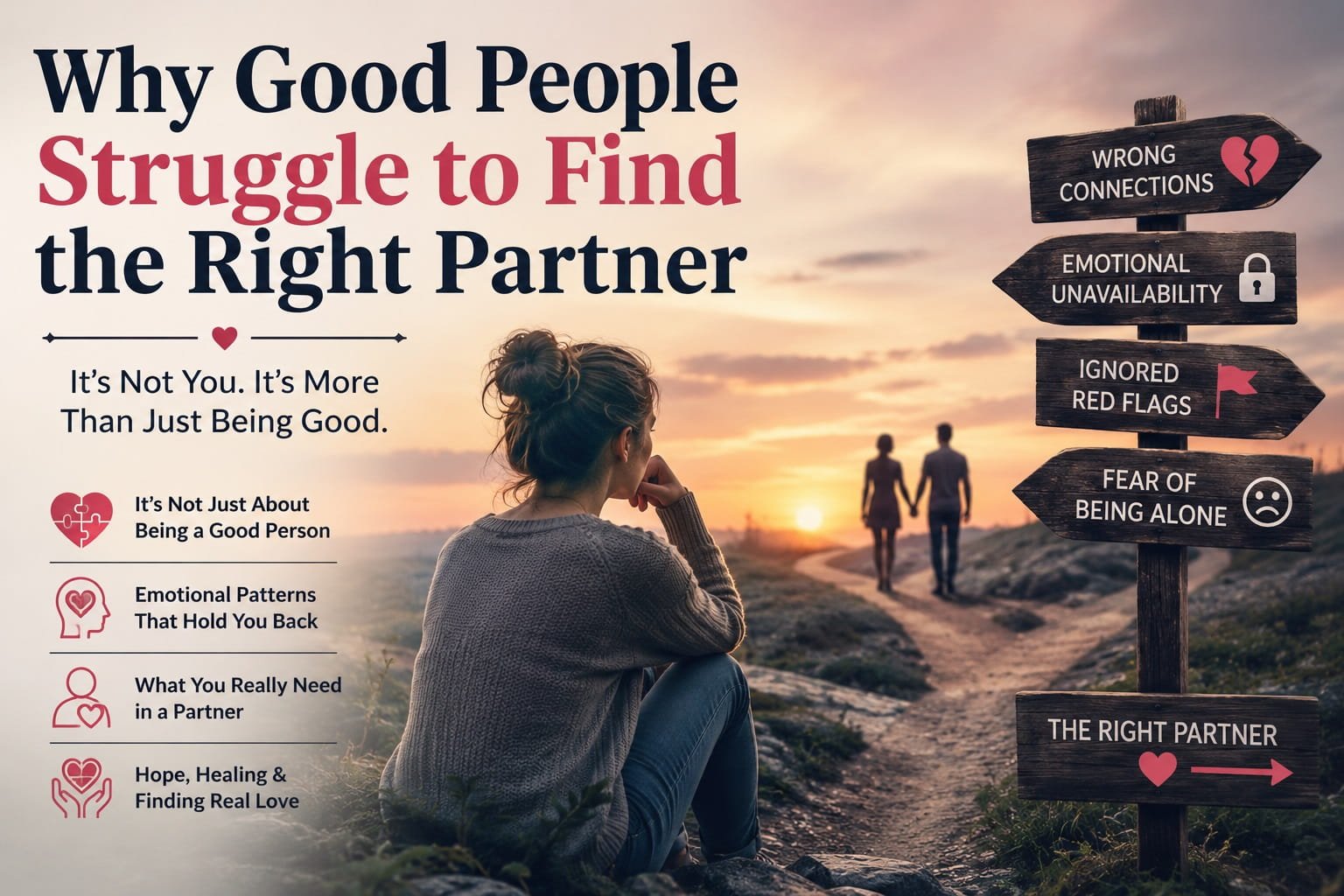
The powerful truth is that being a good person does not automatically make finding love easy. You can have good intentions and still choose the wrong people, ignore important warning signs, or become attached to someone who cannot give you the relationship you truly desire.
The good news is that understanding these patterns can help you make better, healthier, and more confident choices. Once you recognize what creates a strong relationship, finding the right partner becomes less about luck and more about compatibility, trust, emotional availability, and mutual effort.
Why Finding the Right Partner Can Be Difficult
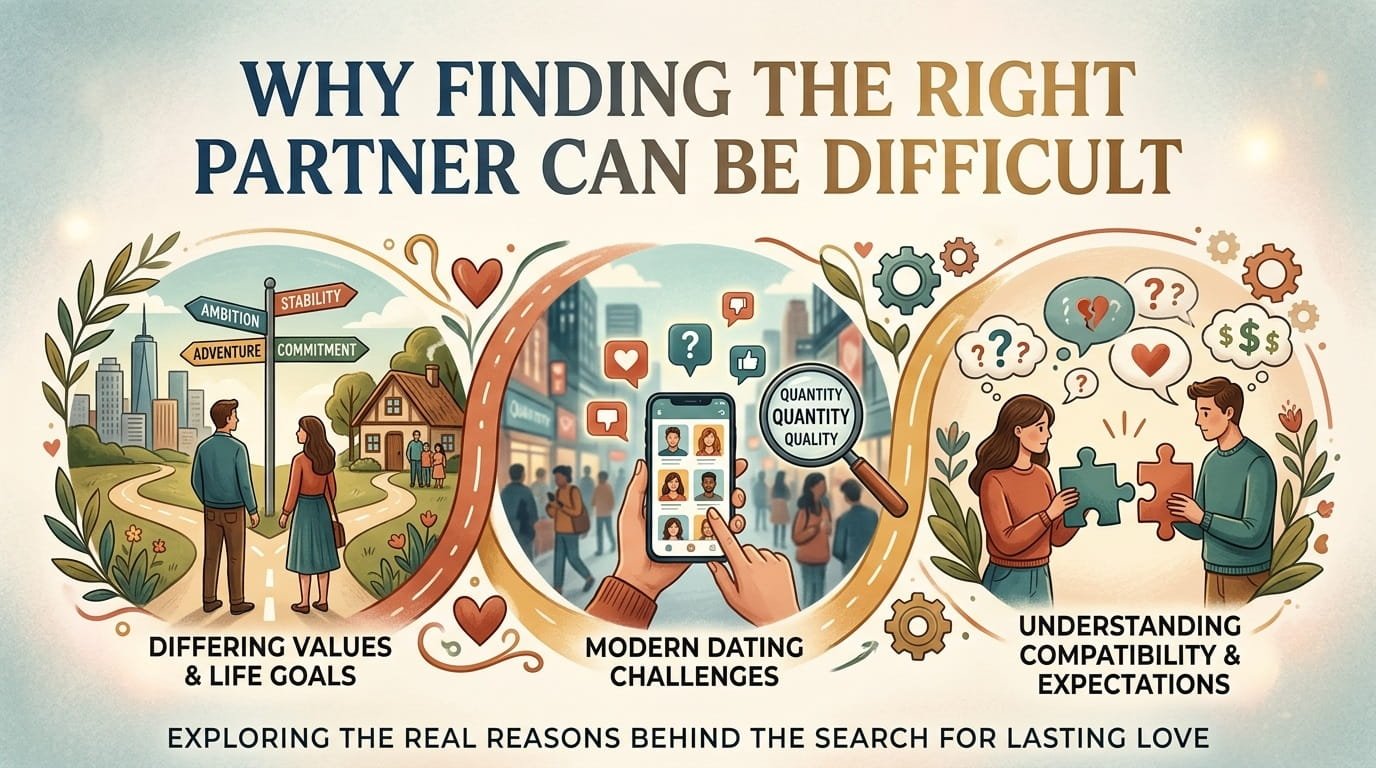
Finding the right partner requires more than meeting someone attractive or interesting. A healthy relationship needs two people whose values, expectations, communication styles, and long-term goals can work together.
Someone can be kind, successful, attractive, or intelligent and still be the wrong partner for you.
For example, two people may genuinely care about each other but have completely different expectations about marriage, commitment, family, communication, lifestyle, or emotional intimacy.
That does not make either person bad.
It simply means they may not be compatible.
1. Finding the Right Partner Means Looking Beyond Chemistry
One powerful reason people struggle with relationships is that they confuse intense chemistry with compatibility.
Attraction Can Feel Strong but Still Be Misleading
Physical attraction and emotional excitement can create an immediate connection. However, a powerful first impression does not automatically mean that someone is capable of building a healthy long-term relationship.
You might feel strongly attracted to someone who is inconsistent or emotionally unavailable. At the same time, a stable and emotionally mature person may initially feel less exciting.
This is why how to find a compatible partner for a serious relationship is an important question to consider.
Instead of asking only, “Do I feel attracted to this person?” ask:
- Do we share important values?
- Do we want similar things?
- Can we communicate honestly?
- Do we respect each other’s boundaries?
- Can we handle disagreements respectfully?
- Are we both emotionally available?
- Do our long-term goals fit together?
These questions help you separate temporary excitement from genuine compatibility.
2. Good People Sometimes Give Too Much Too Soon
Caring people often have generous hearts.
They may give their time, attention, emotional support, forgiveness, and commitment before the other person has earned that level of trust.
While generosity is a beautiful quality, giving too much too early can create an unhealthy relationship dynamic.
A Healthy Relationship Needs Equal Effort
A relationship should not depend on one person constantly starting conversations, planning dates, solving problems, apologizing, and keeping the connection alive.
Healthy relationships require communication, connection, respect, and constructive conflict management.
The American Psychological Association highlights communication, connection, respect, and constructive approaches to relationship problems as important parts of healthy relationships.
The essential lesson is:
Give according to what is being built together, not according to what you hope the relationship will become.
3. Finding the Right Partner Requires Recognizing Red Flags
Good people often see the best in others. That can be a wonderful quality, but it can also become painful when it causes someone to repeatedly excuse unhealthy behavior.
You may overlook:
- Constant inconsistency
- Avoidance of commitment
- Disrespectful communication
- Repeated broken promises
- Emotional unavailability
- Controlling behavior
- Major differences in relationship goals
Do Not Fall in Love With Potential
One of the most important lessons in dating is to judge someone by their consistent behavior rather than their potential. A person may say they want a serious relationship. What matters is whether their actions demonstrate that they are ready for one. Someone may also promise to change, communicate better, or become more committed. Change is possible, but building a relationship around someone’s future potential can lead to disappointment. The Gottman Institute recommends considering qualities such as trustworthiness, kindness, emotional intelligence, communication, and compatible life goals when choosing a long-term partner.
4. Finding the Right Partner Starts With Knowing What You Need
Some people know they want love but have never clearly defined what a healthy relationship actually means to them. Without clear standards, it is easy to confuse attention with affection and attraction with compatibility.
Define Your Relationship Priorities
Before finding the right partner, understand what you genuinely need.
| Relationship Area | Questions to Ask Yourself |
|---|---|
| Core values | Which values must my partner share with me? |
| Emotional needs | What kind of communication, affection, and support do I need? |
| Relationship goals | Do we want the same level of commitment? |
| Lifestyle | Can our everyday lives realistically work together? |
| Preferences | Which qualities are desirable but not essential? |
This distinction is important because nobody will perfectly match every preference. The goal is not to find a flawless person. The goal is to find someone whose important values, needs, and relationship expectations are compatible with yours.
5. Emotionally Unavailable People Can Make Love Feel Painful
Another reason finding the right partner can be difficult is repeatedly becoming attracted to emotionally unavailable people. An emotionally unavailable person may avoid vulnerability, send mixed signals, resist commitment, disappear during difficult conversations, or keep the relationship undefined. Unfortunately, uncertainty can sometimes feel exciting.
Familiar Patterns Can Feel Like Attraction
If someone has repeatedly experienced inconsistent relationships, emotional unpredictability can begin to feel familiar. A calm and stable person may initially seem less exciting because there is less uncertainty. That does not mean every dating disappointment is caused by a psychological pattern. Sometimes you simply meet the wrong person. However, recognizing repeated patterns can help you make better choices.
Instead of asking:
“How strongly do I feel about this person?”
also ask:
“How consistently does this person show up for me?”
Consistency is often more meaningful than intensity.
6. Do Not Expect Finding the Right Partner to Happen Effortlessly
Many people believe that if two people are truly meant for each other, everything will happen naturally. Real relationships are more complicated. A healthy relationship requires communication, compromise, emotional awareness, boundaries, patience, and ongoing effort.
Building Is Different From Chasing
There is an important difference between building a relationship and chasing one.
Building means both people contribute.
Chasing means one person repeatedly tries to create a relationship that the other person is not equally invested in.
The right partner will not make every problem disappear. However, they should make mutual effort possible.
7. Do Not Lower Healthy Standards Out of Fear
After several disappointing experiences, some people become afraid that they will never find love. That fear can lead them to lower their standards and accept relationships that do not meet their emotional needs.
Standards Are Not Perfectionism
Healthy standards can include:
- Respect
- Honesty
- Trust
- Emotional availability
- Consistent communication
- Shared relationship goals
- Kindness
- Willingness to resolve conflict
Perfectionism is different. Perfectionism may cause someone to reject a genuinely good person because of minor preferences or unrealistic expectations.
The goal is healthy selectivity, not perfection.
8. Finding the Right Partner May Take Time
A stable relationship does not always begin with dramatic chemistry. Some relationships develop slowly as two people discover each other’s personality, values, humor, goals, and emotional world. Research discussed by the American Psychological Association has found that romantic love can remain meaningful in long-term relationships and that greater romantic love is associated with greater relationship satisfaction. This means you do not necessarily need instant certainty. Sometimes a meaningful relationship becomes stronger as trust develops.
Give Healthy Connections a Fair Chance
If someone is respectful, consistent, emotionally available, and compatible with your values, do not automatically reject the connection simply because it lacks instant intensity.
Love can grow.
Trust can grow.
Emotional intimacy can grow.
How to Improve Your Chances of Finding the Right Partner
If you want to improve your chances of finding a healthy relationship, change the way you evaluate potential partners.
Focus on Character Over Charm
Charm can attract you.
Character reveals how someone treats you when life becomes difficult.
Pay attention to how a person handles disappointment, disagreement, responsibility, boundaries, and other people.
Watch Actions Instead of Words
Words can tell you what someone wants you to believe.
Actions show what they are actually prepared to do.
Look for consistency between what someone says and what they do.
Learn How to Recognize Healthy Communication
Healthy communication does not mean never disagreeing. It means being able to discuss difficult subjects without humiliation, manipulation, threats, or constant defensiveness. If you want to learn more about how to build emotional intimacy that lasts, focus on listening, emotional openness, appreciation, and respectful communication.
Build Friendship Alongside Romance
A strong romantic relationship needs more than attraction. Friendship, trust, curiosity, appreciation, emotional safety, and shared experiences can create a powerful foundation for long-term love. The Gottman Institute describes friendship as an important foundation for trust and intimacy in strong relationships.
The Right Partner Does Not Have to Be Perfect
Finding the right partner does not mean finding someone without weaknesses. Everyone has imperfections, fears, habits, and difficult moments. The right person is someone who can grow with you, communicate honestly, respect your individuality, accept responsibility, and work toward a relationship where both people feel valued. You should also be willing to offer those qualities in return.
Ask Yourself a Better Question
Instead of asking:
“Why can’t I find someone who loves me?”
ask:
“Am I choosing people who are capable of building the relationship I want?”
That small change can create a powerful shift. Dating becomes less about seeking validation and more about discovering genuine compatibility.
Frequently Asked Questions
Why do good people struggle to find the right partner?
Good people may struggle because kindness alone does not determine compatibility. They may repeatedly meet unavailable partners, prioritize chemistry over shared values, ignore red flags, or give more effort than they receive.
How do I know if someone is the right partner?
Look for consistent behavior, emotional availability, respect, shared relationship goals, healthy communication, trust, and compatible core values.
Should I lower my standards to find love?
No. Instead, distinguish between healthy standards and unrealistic expectations. Respect, honesty, trust, and emotional availability should not be sacrificed simply because you fear being alone.
Can attraction grow over time?
Yes. Attraction can develop as trust, friendship, emotional connection, and familiarity grow. Immediate intensity is not the only sign of relationship potential.
What qualities should I look for in a long-term partner?
Look for emotional maturity, trustworthiness, kindness, effective communication, shared values, emotional availability, and a genuine willingness to work through challenges together.
Final Thoughts
Being a good person does not guarantee that finding love will be easy. However, difficulty finding the right partner does not mean you are unlovable or destined to remain alone.
Sometimes the answer is not to become more attractive, more agreeable, or more giving. It is to become more intentional about who you choose.
Choose consistency over confusion. Choose character over charm. Choose compatibility over temporary chemistry. Most importantly, choose a relationship where effort, respect, communication, and affection move in both directions.
The goal is not simply to find someone who wants you.
The goal is to find someone with whom you can build a healthy, mutually fulfilling relationship.