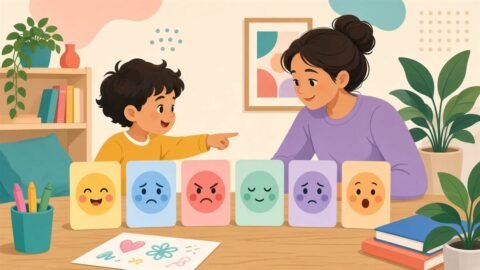
Children are not born with a full feelings vocabulary. They learn it from adults who notice, name, and make room for expression - even when the timing is inconvenient. How
From bedtime worries to teenage silence, families live inside a stream of feelings that rarely come with neat labels. Emotional communication between parents and children is how those feelings get
Children learn emotional language the way they learn reading - through practice, play, and patient adults beside them. Lectures about feelings rarely stick; experiences do. Emotional communication activities for children
Parent-child talks can feel like talking past each other: you ask caring questions, your child gives one-word answers, and both of you walk away frustrated. Improving communication is less about
An angry child can trigger a parent's own surge of frustration in seconds. You want peace, they want to be heard, and the conversation spirals. Learning how to talk to
"You're overreacting" lands like a door slam on a child's heart. "That sounds really disappointing" can open the same conversation wide. How to validate a child's feelings is one of
Some children announce every feeling loudly. Others swallow emotions until they leak out as stomachaches, sarcasm, or sudden outbursts. Recognizing signs your child is struggling to communicate emotions early gives