



“You’re overreacting” lands like a door slam on a child’s heart. “That sounds really disappointing” can open the same conversation wide. How to validate a child’s feelings is one of the most powerful parenting skills because it tells kids their inner experience makes sense – even when behavior still needs limits. Validation is not agreement with every choice; it is respect for the emotion driving the moment.
What Validation Means in Parenting
Emotions prepare us to respond to meaningful events (APA Dictionary: emotion). When parents name and accept those signals, children learn regulation faster than when feelings are dismissed. Validation sits at the core of healthy emotional communication between parents and children and supports emotional trust over time.
Without validation, advice sounds like criticism. With it, the same advice can land after the nervous system settles. This skill pairs naturally with improving parent-child communication and with guides on stronger emotional communication overall.

Invalidating Phrases and Better Alternatives
“Stop crying”
Try: “Something feels really big right now. I am here with you.”
“It’s not a big deal”
Try: “It feels big to you. Tell me more about what happened.”
“You’re fine”
Try: “You do not look fine. Want a minute before we talk?”
“Because I said so”
Try: “The rule stays, and I hear you wish it were different.”
Steps to Validate Before You Guide
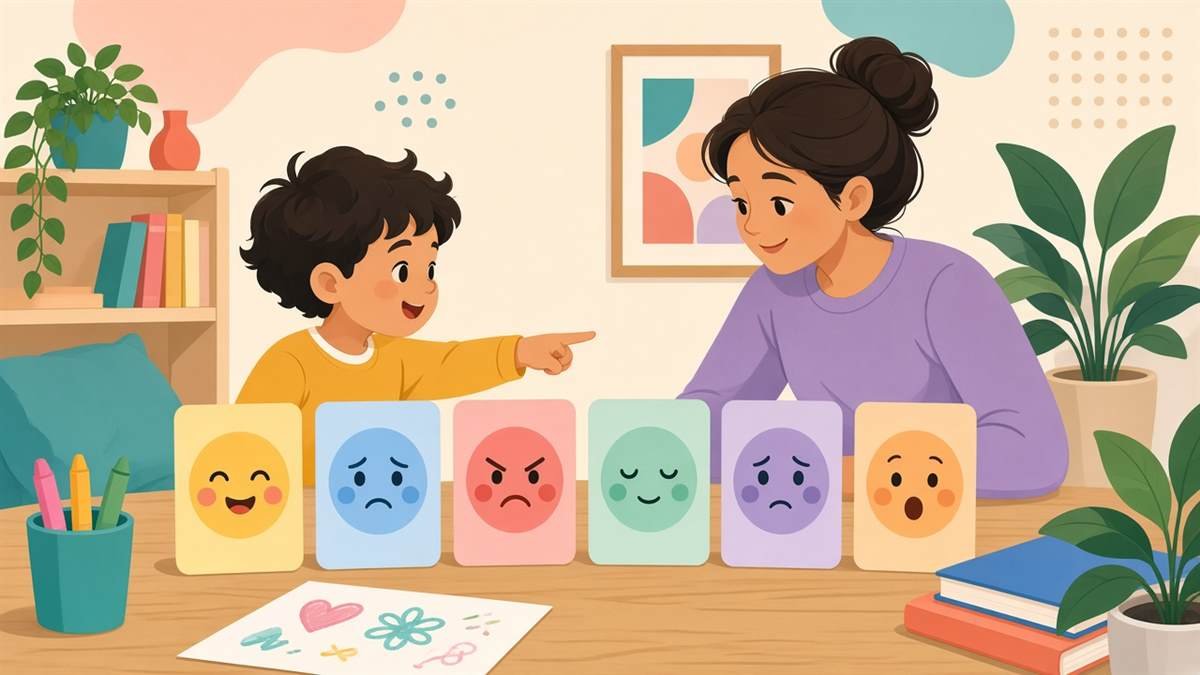
Pause your own urge to fix. Notice body language. Reflect feeling and context: “You seem embarrassed after practice. That makes sense when you wanted to play more.” Ask if you got it right. Only then discuss behavior or next steps. This sequence helps when children say “I don’t know” – your guess gives them language to confirm or correct.
During anger, validation must pair with boundaries. “You are furious. Hitting is not okay.” See talking to an angry child for full sequences. Practice feeling words through emotional communication activities so validation uses vocabulary your child recognizes.

Validation and Limits: They Work Together
| Situation | Validation | Limit or action |
|---|---|---|
| Homework refusal | “Homework feels boring and hard tonight.” | Break into one small task, then break time |
| Sibling hit | “You were mad she took your toy.” | No hitting; repair and alternative script |
| Bedtime protest | “You wish you could stay up like Friday.” | Bedtime holds; choose book together |
| Social rejection | “That hurt to be left out.” | Plan one kind connection step tomorrow |
When Validation Feels Hard for Parents
Your child’s fear may trigger your own childhood memories. You might rush to cheer them up because sadness scares you. Naming your limit helps: “I need a breath so I can listen well.” Parenting resources encourage modeling calm coping (CDC: positive parenting tips) and seeking support when family patterns repeat (APA: parenting).
If a child rarely responds even to validation, review signs of struggling emotional communication and expand expression tools via helping children express feelings. Persistent severe symptoms merit professional care (NIMH: child and adolescent mental health).
Levels of Validation You Can Layer
Start with presence: staying nearby without fixing. Add accurate reflection of words and body language. Acknowledge history when relevant: “Last time this happened you felt left out too.” Finally, normalize: “Many kids feel this when teams get picked.” Layering beats jumping to advice.
With older children, validate values behind emotion: “You care about fairness – that matters.” Values validation respects identity while you still discuss behavior.
Validation in Discipline Conversations
Consequences land softer when feelings are named first. “You were furious. Hitting broke our rule. Here is the consequence, and I still love you.” Skipping the middle sentence feels like love is conditional on mood.
Avoid using validation as a bargaining chip (“I validated you, now obey”). Validation is unconditional respect for inner experience; limits remain separate. That separation is what prevents permissive parenting fears from blocking empathy.
Repair When You Invalidate by Accident
Every parent minimizes sometimes. Repair explicitly: “I told you to stop crying. Feelings are allowed here. Want to try again?” Repairs teach that relationships survive mistakes – a form of validation itself.
Invite feedback from kids who are ready: “What could I say differently next time?” Their answers train you and show them their voice shapes family culture.
Validation Scripts by Age
Preschool: “Big feelings. I stay close.” Early elementary: “You wanted the toy. Sharing is hard.” Tweens: “That comment online stung. Anyone would feel off balance.” Teens: “You sound torn between friends. Both loyalty and honesty matter to you.” Adjust length, keep respect.
Practice scripts when calm so they arrive more easily when you are triggered. Partners can cue each other gently if one parent forgets validation mid-conflict.
Validation and Sibling Fairness
Validate each child’s feeling even when facts conflict: “You both wanted the same seat and both felt wronged.” Fair validation does not mean equal outcomes; it means equal dignity. Then problem-solve turns, timers, or trades.
Avoid comparing pain (“Your brother has it worse”). Comparison invalidates automatically. Each child’s inner world deserves its own acknowledgment.
Teaching Kids to Validate Themselves
Model self-validation aloud: “I feel embarrassed I snapped. Many parents get overwhelmed.” Children learn inner compassion by hearing yours. Invite them to name their own feelings after you reflect once, building internal skill.
Validation in Public and Extended Family Settings
When relatives minimize feelings at gatherings, you can validate quietly on the side: “That comment was a lot. Your feeling makes sense.” Children remember who protected their dignity. Brief validation prevents public shame from becoming private silence at home. Later, debrief what happened so they learn family rules about respect even when guests disagree. Debriefs turn awkward moments into lessons about loyalty and boundaries without forcing performative gratitude toward people who hurt them.

Validation When You Disagree With Behavior
Validation does not require liking the behavior. You can say: “You were excited and threw the toy. Excitement makes sense. We still do not throw.” The child hears that their energy is human while the rule holds. That combo reduces defiance fueled by shame.
Video: Validation Scripts for Busy Parents
Replace the placeholder below with your chosen video embed.
Final Thoughts
Validating a child’s feelings costs little time and pays long dividends in trust and cooperation. Reflect what you see, check your guess, hold limits with warmth, and repair when you miss the mark. Children who feel understood learn to understand themselves – the heart of emotional health in families. Practice in low-stakes moments so validation arrives automatically when stakes are high.
Build on validationVisit Parenting on Love Supports for companion articles on communication, trust, and expression at every age.
Frequently Asked Questions
Does validating mean I approve of bad behavior?
No. You validate the feeling while addressing behavior separately. Both can happen in the same conversation.
What if my child rejects validation?
Offer space and try shorter reflections later. Some kids need action first – water, food, rest – before words land.
Can validation spoil a child?
Validation is not giving in. It is emotional respect paired with consistent boundaries.
How do I validate when I disagree strongly?
Name their perspective without endorsing harmful choices: “I see why you felt ignored, and we still cannot skip school.”
Where can I get more help?
Parenting classes, therapists, and resources like NIMH find help support families learning validation together.




[…] before validation feels dismissive. The child stays angry because nobody named their […]
[…] helpful fixes can sound like criticism. Lead with validation before […]
[…] from validation – see how to validate a child’s feelings – then teach words, stories, and routines. If talk stalls, combine approaches from talking to […]