


Empathy in relationships is not agreeing with everything. It is the skill of understanding behavior before you defend yourself. Couples who lead with empathy turn confusing moments into trust deposits, especially when stress makes people act smaller than their love.
Why Empathy in Relationships Changes Behavior Conflicts
When partners feel understood, nervous systems settle. That makes problem-solving possible. Without empathy, every behavior becomes a character trial. Research-based repair work emphasizes understanding, affection, and responsibility as tools that reduce negativity during conflict (Gottman conflict blueprints).

The Empathy Cycle Couples Can Practice
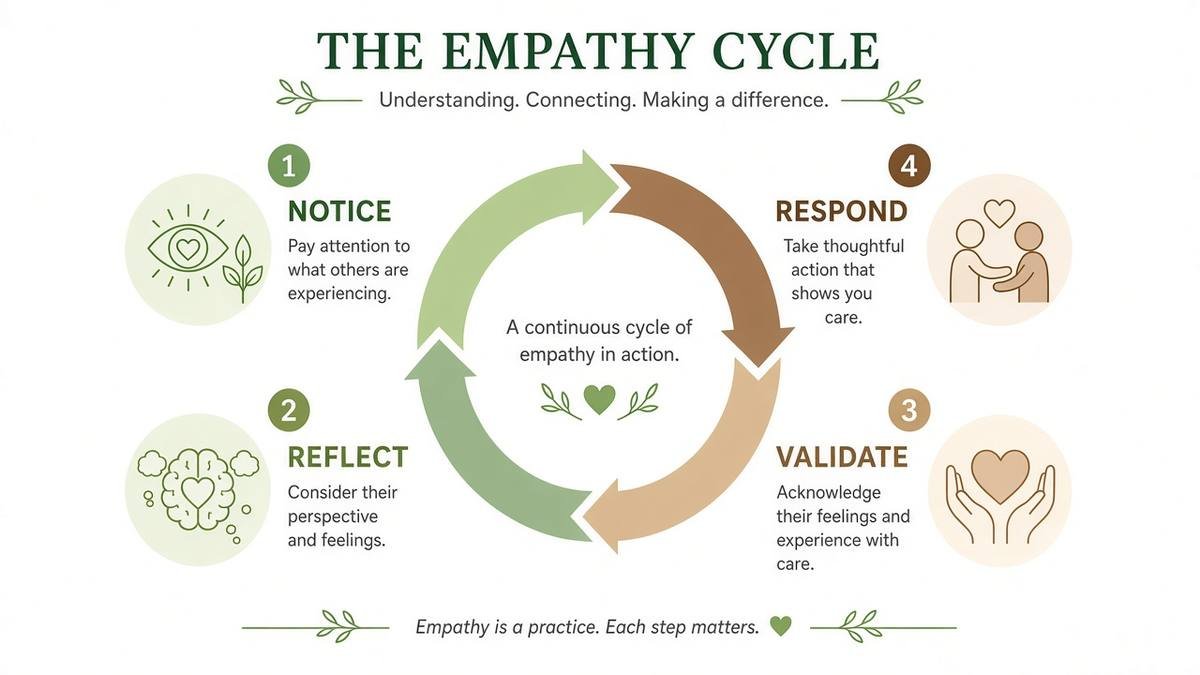
- Notice: face, tone, pace, and energy shifts.
- Reflect: “It sounds like you felt dismissed in that meeting and then with me.”
- Validate: “That makes sense given how much you care.”
- Respond: ask what would help in the next hour.

| Empathy move | Sounds like | What it builds |
|---|---|---|
| Reflect feeling | “You felt alone in that decision.” | Being known |
| Validate meaning | “I get why that stung.” | Emotional safety |
| Own impact | “I see how my joke landed wrong.” | Trust |
| Offer care | “Want a hug or a plan?” | Choice and agency |
Four Horsemen Couples Should Avoid
Criticism, contempt, defensiveness, and stonewalling block empathy. Naming those patterns early protects the culture of the home.
Empathy Versus Dismissal
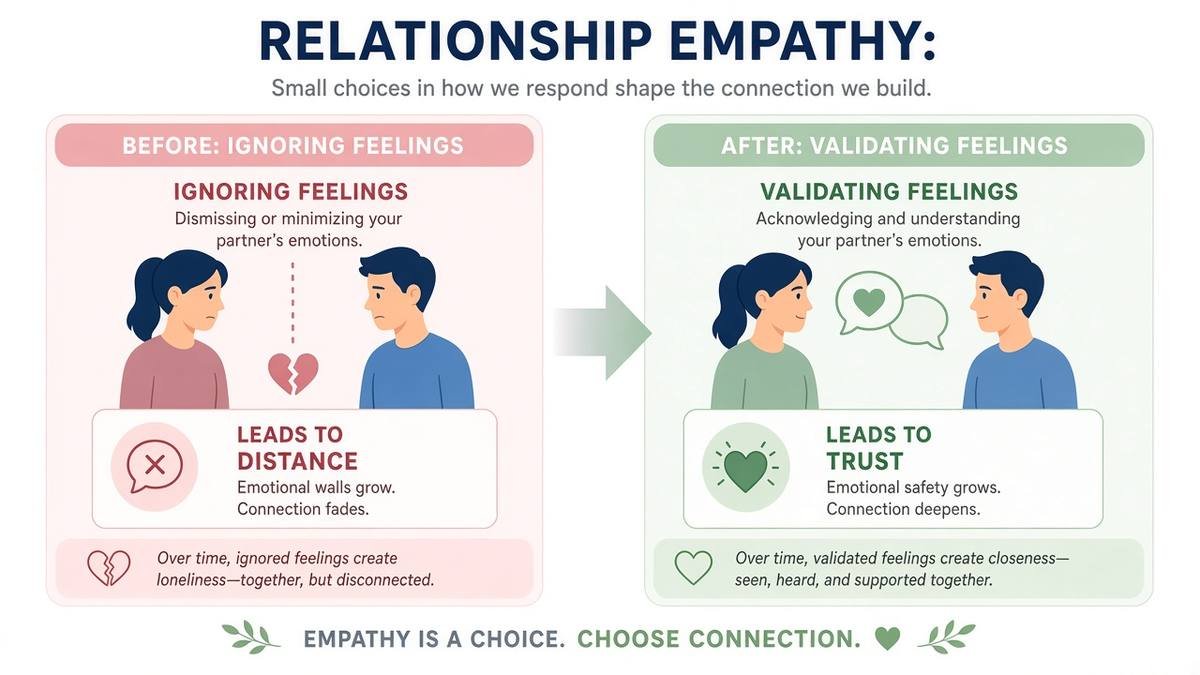
Dismissal sounds like “You are overreacting.” Empathy sounds like “This mattered to you.” You can still disagree about facts after you agree about feelings. That sequence is how empathy in relationships stays honest rather than enabling.
Try a two-minute empathy drill
One partner speaks for two minutes about a stressful moment. The other may only reflect and validate. Switch. No fixing until both feel understood. Related reading: keeping emotional connection strong.

Repair Attempts That Rebuild Connection
Empathy and repair work together. A sincere “I get why that hurt” is often the bridge back to teamwork.
Empathy Habits That Stick
Empathy in relationships becomes durable when you attach it to existing routines. During the commute home, ask yourself what your partner might be carrying today. That mental rehearsal makes evening empathy faster. At bedtime, trade one appreciation and one stress. Keep it under five minutes so the habit survives busy seasons.
When conflict returns, open with an empathy sentence before your complaint. Example: “I know you have been stretched at work, and I still need help with bedtime.” Both truths can sit in one breath. Couples who lead with context spend less time defending intentions and more time solving the shared problem.
If empathy feels fake, start with curiosity questions instead of emotional mirrors. “What was the hardest part of that?” is honest even when you cannot yet feel what they feel. Curiosity is the doorway; resonance often follows. Keep practicing even on ordinary Tuesdays so the skill is ready on hard Fridays.
Empathy in Relationships Across Different Attachment Styles
Empathy in relationships looks different when partners have different attachment styles. An anxious partner may need faster reassurance. An avoidant partner may need slower intensity. Empathy means pacing care so both nervous systems can stay online. Rushing either person recreates the threat they fear.
Use bridging phrases: “I can see you want closeness right now, and I also see you need air. Let’s do both in order.” Bridging is empathy with logistics. It refuses the false choice between abandon and smother.
Practice reflective listening after work before devices. Ten minutes of undivided attention often prevents evening conflicts that look like chore fights but are really bids for empathy. If attention is scarce, say so honestly and schedule a better window rather than half-listening.
Empathy also includes cultural and family-of-origin differences. What felt like respect in one home may feel like distance in another. Ask what care looked like in childhood. Those stories explain adult behavior without excusing harm. Understanding history helps couples invent a third culture together.
When empathy is hard because you feel attacked, ask for a pause and return with: “I want to understand you, and I also need my side heard.” Mutual empathy is the goal. One-sided emotional labor will eventually breed resentment. Balanced care keeps empathy sustainable.
Building Empathy in Relationships When You Disagree
Empathy in relationships is most valuable when you do not see the situation the same way. You can say, “I see this differently, and I understand why you feel hurt.” That sentence protects dignity on both sides. Agreement is optional. Understanding is the bridge.
Try perspective swapping for five minutes. Argue your partner’s case as fairly as you can while they listen. Then switch. Couples often discover missing context: unpaid emotional labor, fear of repeating a parent pattern, or exhaustion that was never named. Empathy grows when context becomes visible.
Empathy also includes empathizing with yourself. Self-contempt makes you defensive. If you shame yourself for needing reassurance, you may attack your partner for not providing it perfectly. Self-empathy sounds like, “Of course I want comfort after a rough day.” From that place, requests come out cleaner.
In family systems, empathy scales. Parents who validate a child’s feelings while holding limits teach emotional literacy. Partners who validate each other in front of kids model teamwork. The skill is the same: reflect feeling, hold boundary, stay connected. For more on connection habits, see building love, trust, communication, and connection.
Empathy blockers to watch
Scorekeeping, contempt, and “fix equivalence” block empathy. Scorekeeping turns care into debt. Contempt says “your feelings are beneath me.” False equivalence rushes to “I hurt too” before the first hurt is heard. Sequence matters: first understand, then share your side.
Digital life adds blockers. Reading a tense text without tone invites catastrophe stories. If a message spikes you, ask for a voice note or a call before you reply with heat. Empathy is harder through screens, so move important topics offline when you can.
Frequently Asked Questions
Does empathy mean I have to accept unfair behavior?
No. Empathy understands the feeling and still sets boundaries about actions.
What if my partner uses empathy as a way to avoid change?
Validate feelings, then request a concrete behavior change with a timeline.
How can introverts show empathy without long talks?
Short reflections, a hand squeeze, a follow-up text, or sitting nearby can count.
Is empathy the same as sympathy?
Sympathy feels for someone from a distance. Empathy tries to understand from their frame.
Also see how couples can support each other during difficult times.