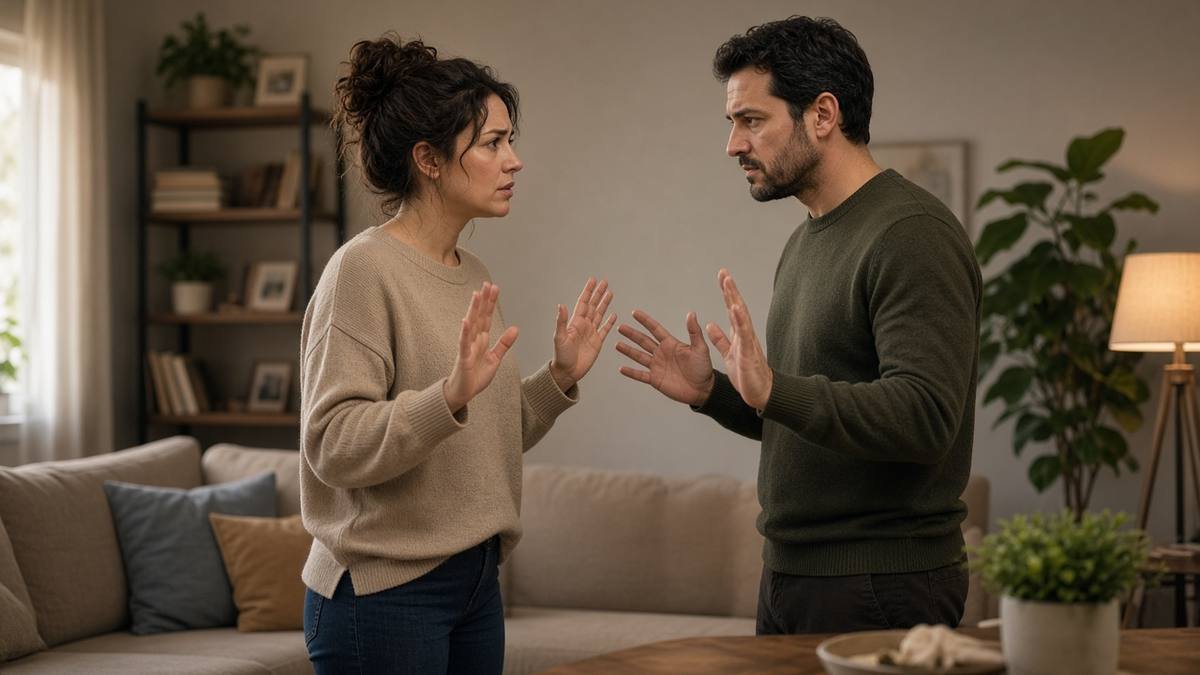



Conflict resolution in relationships is less about winning and more about staying connected while you disagree. De-escalation skills give couples a way to lower heat, protect respect, and make agreements that survive next week, not only tonight.
Conflict Resolution in Relationships Starts With Safety
Masters of relationships keep a high ratio of positive to negative responses during conflict and use repair attempts that the other person can accept (Gottman conflict guidance). Without safety, problem-solving becomes performance.

Core De-Escalation Skills Every Couple Should Know
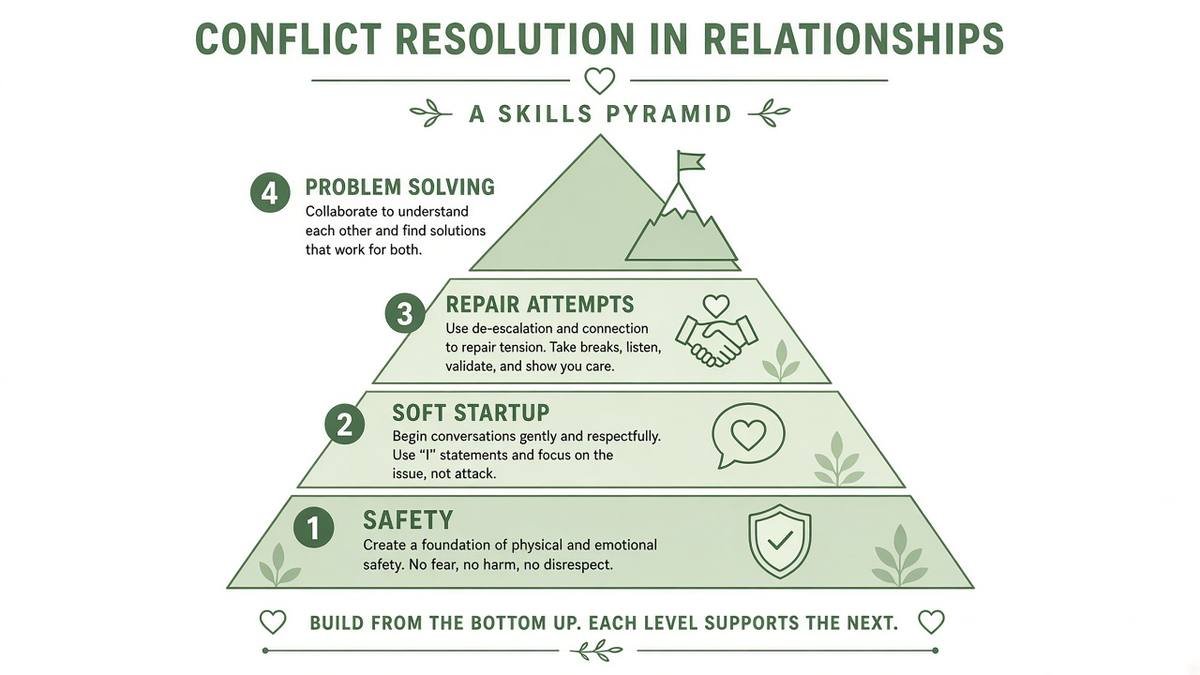
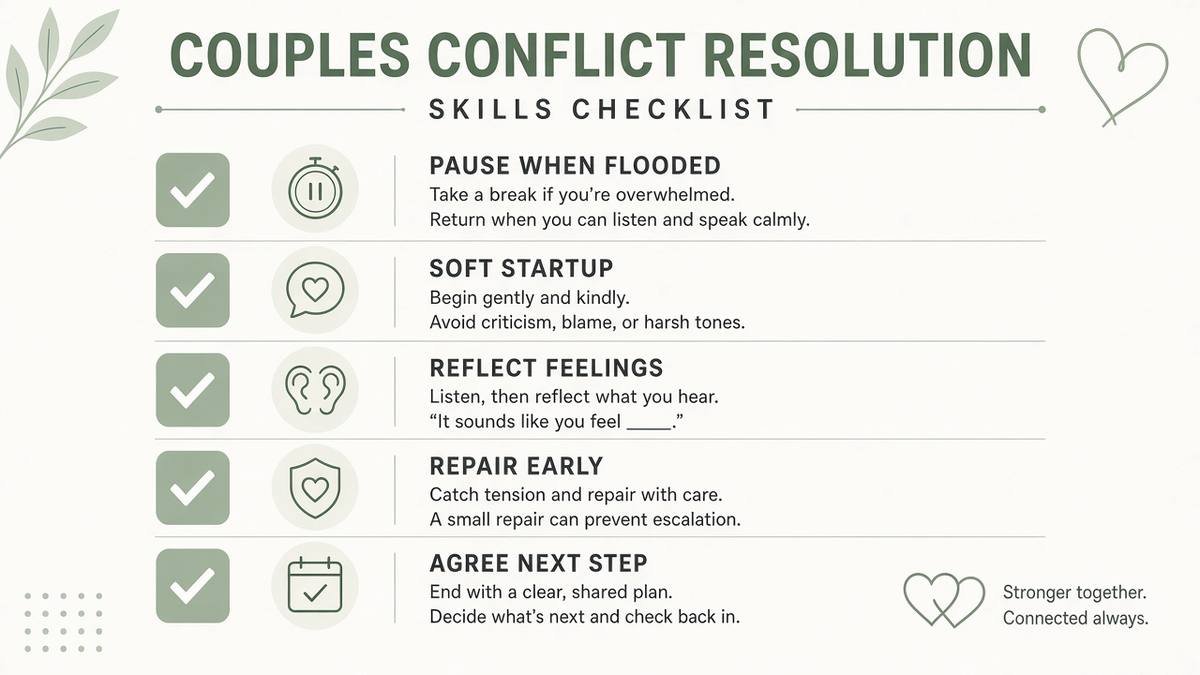
- Soft startup with feeling, situation, and need.
- Flooding awareness and timed breaks.
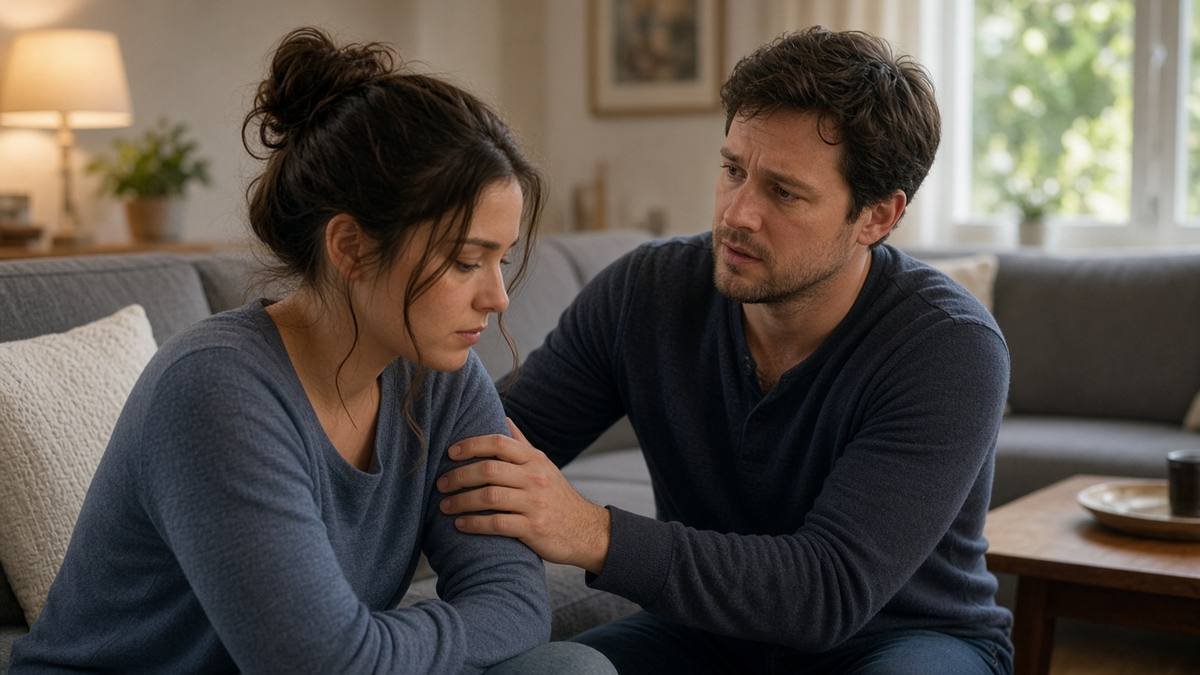
- Repair attempts: humor, apology, “I hear you,” touch if welcome.
- Accepting influence instead of stonewalling every request.
- Clear agreements with a check-in date.
| Skill | In the moment | Afterward |
|---|---|---|
| Soft startup | “I feel worried about…” | Note what opening worked |
| Pause | “I need 25 minutes. Back at 7:30.” | Keep the return promise |
| Repair | “Can we start over?” | Appreciate the repair |
| Agreement | One concrete next step | Review in seven days |
The Science of Healthy Relationships
Evidence-based relationship science keeps pointing to friendship quality, gentle openings, and repair capacity as foundations for lasting love.
Putting Skills Into a Weekly Habit
Do not wait for a crisis to practice. A ten-minute Sunday State of the Union covers appreciations, one stressor, and one ask. Pair that habit with our guides on resolving misunderstandings and healthy relationship boundaries.
Making Marriage Work: Lessons From Research
Skills compound. Couples who rehearse de-escalation when calm use it faster when stressed.
Measuring Progress in Conflict Resolution Skills
Conflict resolution in relationships improves faster when you measure it. Once a month, rate recovery speed, kindness under stress, and follow-through on agreements from one to five. Share scores without debate first. Then pick one skill to emphasize next month, such as softer openings or earlier pauses.
Notice spillover benefits. Better conflict skills often improve sleep, parenting teamwork, and sexual connection because fear drops. Track those secondary gains so you stay motivated when a tough week returns old habits. Progress is rarely linear; look at the trend across months.
Share wins with each other out loud. “I liked how you paused last night” reinforces the culture you want. Conflict resolution in relationships is maintained by recognition as much as by correction. Keep investing in friendship outside the hard talks so de-escalation has a soft place to land.
Conflict Resolution in Relationships: From Skills to Culture
Skills fade unless they become culture. Culture means the ordinary way your home handles tension. If sarcasm is the default, soft startups will feel foreign. Choose three cultural norms: no name-calling, pauses are respected, and repairs are welcomed. Post them. Revisit them at month end.
Teach the culture when you are happy, not only when you are angry. Appreciation rituals raise the positive balance that makes conflict resolution in relationships possible. A daily thank-you text is not fluff; it is prevention.
Involve the whole household carefully. Kids do not need adult details, but they benefit from hearing, “We disagreed and we are working on it kindly.” That message reduces fear when voices get firm. It also shows that love and conflict can coexist.
Track relapse without despair. Old patterns return under sleep debt and money stress. Relapse is information about load, not proof that skills failed forever. Return to basics: pause, soft open, repair, one agreement. Simplicity scales under pressure.
If you want a deeper weekly structure, combine a State of the Union with a short skills drill. Twenty minutes total can protect a marriage more than occasional marathon fights. Conflict resolution in relationships is maintenance, like cleaning a kitchen you cook in every day.
Practicing Conflict Resolution in Relationships as a Team Sport
Conflict resolution in relationships improves when couples stop treating fights as courtroom drama. You are teammates facing a pattern. Name the pattern out loud: pursue-withdraw, criticize-defend, or shut-down-escalate. Patterns are easier to change than personalities.
Build a shared skills menu and post it where you can see it. Include soft startup examples, pause rules, and three repair phrases each person actually likes. Personalized repair works better than generic advice. Some people want humor; others want a sincere apology first.
Measure progress by recovery speed, not by never fighting. How fast do you return to warmth? How often do you accept influence? How rarely do you use contempt? Those metrics predict healthier conflict resolution in relationships over time. Celebrate shorter fights and kinder reopenings.
Include extended family boundaries in your skills practice. Many couples escalate when loyalty to parents collides with loyalty to the partnership. Decide together what information is private and how you will support each other in public. For boundary language, see healthy relationship boundaries.
Skill drills for calm days
Role-play a minor disagreement once a week for five minutes. Practice pausing on purpose. Practice paraphrasing. Muscle memory formed in calm is available in storm. If drills feel awkward, that awkwardness is growth, not failure.
Finally, keep friendship deposits high outside conflict: shared jokes, errands together, appreciation texts. De-escalation skills work better inside a friendship. Conflict resolution in relationships is not only what you do in the fight; it is what you do in the ordinary Tuesday.
Choose a monthly skills date. Review your conflict resolution agreements, update repair phrases, and appreciate one specific moment of de-escalation from the past weeks. Ritual keeps conflict resolution in relationships from becoming a crisis-only skill set.
If gridlock remains after good-faith practice, invite a licensed couples therapist. Skills plus support often unlock stuck patterns faster than either approach alone.
Frequently Asked Questions
What is the difference between conflict resolution and avoiding conflict?
Resolution faces the issue with care. Avoidance delays the issue until resentment grows.
Which de-escalation skill should we learn first?
Flooding pauses with a return time. Without calm bodies, other skills fail.
How do we handle gridlocked problems?
Aim for understanding and temporary experiments, not instant permanent solutions.
Can these skills help co-parents who are not romantic partners?
Yes. Soft startups and repair language help any high-stakes family conversation.
Keep learning with how to talk about problems without starting a fight.