



After a sharp argument with your partner, your chest tightens. Before a difficult conversation, your stomach churns. When someone you love goes quiet, your shoulders lock and your mind races. These are not random body glitches. They are part of the mind-body connection in relationships: how thoughts, emotions, and physical sensations influence each other when you are dating, married, or rebuilding trust. Understanding that loop can help couples respond with care instead of blame when stress shows up in the body.
Why Relationship Stress Lands in the Body
Couples live inside constant social signals. Safety with a partner can soften breathing and muscle tension. Perceived rejection, criticism, or unpredictability can activate a stress response: faster heart rate, shallow breathing, restlessness, or fatigue after the wave passes. The American Psychological Association notes that stress affects how we think, feel, and behave in daily life (APA: stress). In romance, that often means small moments carry extra weight because attachment matters so much.
Attachment style also shapes what your body expects from closeness (APA Dictionary: attachment style). One partner may feel calm when texts are frequent; another may need quiet to think. Neither is wrong, but mismatched signals can trigger physical alarm until you learn each other’s patterns. Research on adult attachment and stress suggests these links are common in intimate bonds (Simpson and Rholes on attachment and stress).

Common Thought-Body Patterns in Couples
Thoughts do not have to be dramatic to change the body. Quiet stories can do it: “They are pulling away,” “I always mess this up,” or “If I speak up, they will leave.” Those interpretations fire faster than logic, especially during conflict. The body then reacts as if the story is already true.
Hypervigilance after hurt
After repeated arguments or broken trust, partners may scan for danger in neutral moments. A tired tone or a late arrival can spike adrenaline even when no threat exists. This pattern connects to why couples repeat the same fight until underlying fear is addressed. See the real reason couples keep having the same argument.
Shutdown instead of fight
Some people go numb, foggy, or exhausted when conflict rises. That freeze response protects from overwhelm but can look like “not caring” to a partner who wants engagement. Naming shutdown as a body response, not indifference, opens safer repair.
Reassurance loops
Anxious thoughts may drive repeated questions or closeness-seeking, which temporarily calms the body but strains the relationship. Clear agreements about check-ins often work better than endless reassurance.
How Partners Can Support Each Other’s Nervous Systems
Support is not about fixing every feeling. It is about co-regulation: helping each other’s bodies settle enough to think and speak. Simple shifts include lowering voice volume, sitting side by side instead of squared off, and agreeing to pause before sentences escalate. Trust grows when those pauses are followed by return-to-conversation, as described in building trust in relationships.
Ask body-based questions: “Are you tense right now?” or “Do you need twenty minutes to calm down before we continue?” Respect a yes without punishment. Partners who honor regulation time often resolve issues faster because brains come back online. For broader habits, explore how couples can keep their relationship healthy.
Thought Patterns and Physical Signals: A Couple’s Map
| Relationship thought | Common body signal | Supportive partner response |
|---|---|---|
| “I am not enough for them” | Tight chest, urge to over-apologize | Reflect the feeling, affirm commitment, invite one clear need |
| “They will leave if I am honest” | Stomach knots, delayed speech | Thank them for honesty, avoid punishing vulnerability |
| “They do not care” | Heat, clenched jaw, sharp words | Pause, validate hurt, ask what caring would look like today |
| “I need space but they will panic” | Restlessness, guilt, shallow breath | Agree on space with a return time; use scripts from asking for space |
From Reactive Stories to Shared Safety
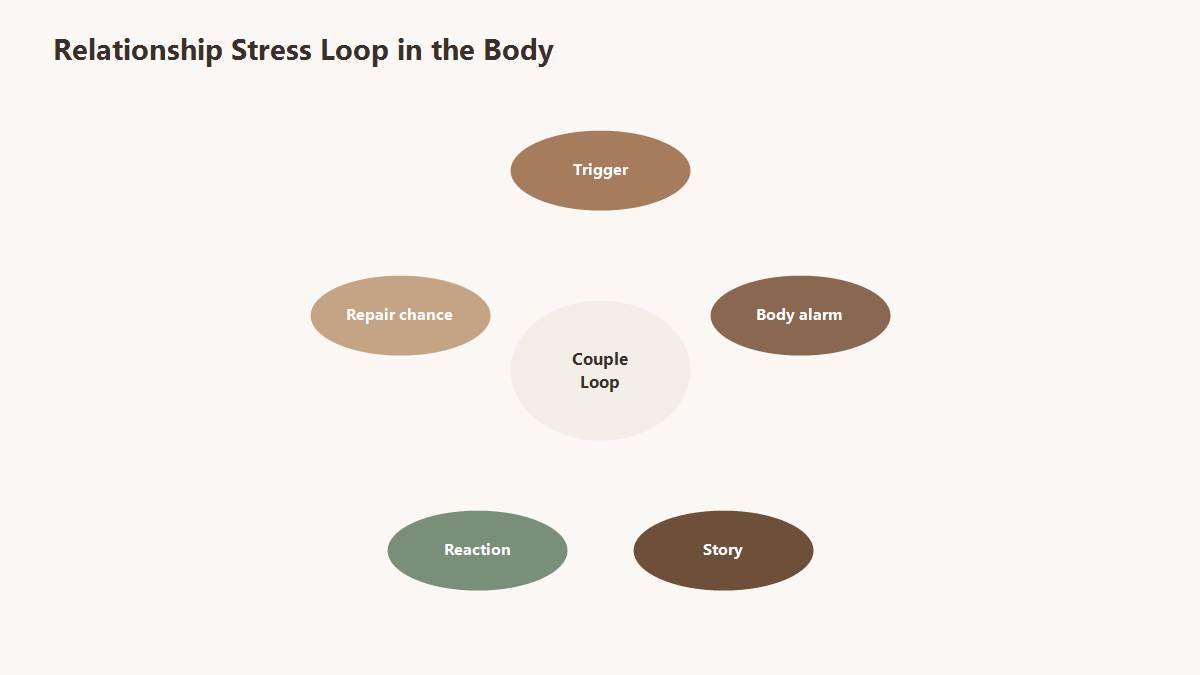
Changing the mind-body loop starts with noticing the story your body believes. When you feel activated with your partner, try naming three facts and one fear. Facts might include: “We agreed to talk tonight,” “They are home,” “They look tired.” Fear might be: “Tired means angry at me.” Sharing the fear as a question – “When you go quiet, I worry you are upset with me. Is that what’s happening?” – invites connection instead of attack.
Emotional safety also includes space. Constant togetherness can keep bodies on alert for some people. Healthy distance can strengthen appreciation, as explained in why personal space makes couples stronger. Balance closeness with recovery time so neither partner lives in chronic stress.
When conflict patterns feel stuck, structured strategies help. Work through hurdles together using ideas from navigating challenges as a couple. Vulnerability practices can reopen tenderness when bodies expect only danger (vulnerability and mental health in relationships).
When to Look Beyond the Relationship
Sometimes physical symptoms persist even when the relationship improves, or they appear across many areas of life. That can signal a need for medical or mental health evaluation, not more self-blame. The National Institute of Mental Health offers general guidance on caring for mental health and finding help (NIMH: caring for your mental health; NIMH: find help). Couples therapy can still be useful alongside individual care when stress is shared.
Video: Calming the Body Before Hard Conversations
Use the embed below for a partner-friendly walkthrough of regulation before difficult talks. Replace the placeholder when you publish.
Final Thoughts
Your body is not betraying you when relationship stress shows up physically. It is communicating that connection matters. Couples who treat those signals as information – not weakness – can build safer patterns of pause, repair, and honest need. Start with one small experiment this week: name a body sensation, share the fear beneath it, and ask for one supportive response.
More support for couplesBrowse our Couples and Relationships sections for trust, space, and communication guides on Love Supports.
Frequently Asked Questions
Can relationship conflict really cause physical symptoms?
Yes. Stress from conflict, distance, or fear in a relationship can contribute to tension, sleep changes, headaches, stomach upset, or fatigue in many people. Persistent or severe symptoms should be evaluated by a qualified clinician.
How can I tell my partner I need a break without abandoning them?
Name a time limit and a return plan. Example: “I am flooded and need twenty minutes to calm down, then I want to keep talking.” This protects your nervous system while preserving emotional safety.
What if my partner dismisses my physical stress as “dramatic”?
Ask for curiosity instead of judgment. Share that body signals are real for you and request one concrete support step. If dismissal is a pattern, consider couples counseling or revisiting trust and respect together.
Does anxious attachment make the mind-body connection stronger?
People who fear abandonment may notice body alarm faster when closeness feels uncertain. Skills like fact-checking, regulation, and clear requests can reduce the intensity over time, especially with a consistent partner.
When should we seek professional help as a couple?
Seek help if stress cycles harm communication, intimacy, or daily functioning, or if either partner feels unsafe. Therapy can teach co-regulation and repair skills tailored to your relationship.