



Every relationship experiences conflict. Whether you’ve been together for six months or twenty years, disagreements are inevitable. However, recurring arguments often signal a deeper issue that deserves attention. Yet many couples find themselves trapped in a frustrating cycle: the same argument keeps resurfacing, despite countless attempts to resolve it.
One week it’s about household responsibilities. The next, it’s about spending time together. Then it’s finances, communication, or parenting. Although the topic may appear different on the surface, the emotional outcome remains the same—hurt feelings, frustration, distance, and the lingering question, “Why do we keep fighting about this?”
In fact, recurring arguments are rarely about the issue itself. Instead, they usually reflect unmet emotional needs. More often, they’re symptoms of deeper emotional needs, communication patterns, and unresolved relationship dynamics.
Understanding what’s really happening beneath these repetitive conflicts can help couples stop arguing in circles and start building a stronger, healthier relationship.
Why Couples Repeat the Same Arguments
Many people believe recurring arguments happen because one partner is stubborn or unwilling to change. While that can sometimes contribute, it’s usually not the root cause.
Most recurring conflicts develop because the underlying emotional concern has never been fully addressed.
Imagine an iceberg. The visible argument—dirty dishes, forgotten anniversaries, or spending habits—is only the small portion above the surface. Beneath it lie unmet emotional needs such as feeling valued, respected, secure, appreciated, or emotionally connected.
As a result, until those deeper concerns are acknowledged, the same disagreement is likely to return.
Surface Problems vs. Real Problems
A common mistake couples make is focusing only on solving the practical issue.
For example:
- “You never help around the house.”
- “You spend too much money.”
- “You’re always late.”
- “You don’t listen to me.”
These statements sound practical, but they often carry emotional meanings like:
- “I don’t feel supported.”
- “I don’t feel important.”
- “I don’t feel respected.”
- “I don’t feel like we’re a team.”
When couples only debate the practical problem, they miss the emotional message behind it.

Emotional Needs Often Drive Repeated Conflict
Every person enters a relationship with emotional needs they hope their partner will help fulfill.
Some of the most common include:
Feeling Appreciated
One partner may contribute significantly to the relationship but feel their efforts go unnoticed.
Over time, small disappointments build into resentment.
Feeling Safe
Emotional safety means being able to express thoughts and feelings without fear of criticism or rejection.
Without safety, partners become defensive rather than honest.
Feeling Heard
Many couples aren’t actually listening—they’re waiting for their turn to respond.
Feeling unheard often creates recurring frustration because one partner never feels understood.
Feeling Important
People want to know they matter.
When work, phones, hobbies, or other responsibilities consistently take priority, conflict often follows.
Communication Patterns That Keep Arguments Alive
Sometimes it’s not what couples argue about—it’s how they argue.
Improving healthy communication skills can dramatically reduce recurring arguments and strengthen emotional connection.
Defensiveness
Instead of listening, one partner immediately explains or justifies their behavior.
This prevents genuine understanding.
Criticism
Attacking someone’s character instead of discussing behavior often causes partners to shut down emotionally.
Instead of saying:
“You never care about me.”
Try:
“I’ve been feeling lonely lately, and I’d love more quality time together.”
Stonewalling
One partner emotionally withdraws or refuses to engage.
Although intended to avoid conflict, it often leaves problems unresolved.
Contempt
Sarcasm, eye-rolling, mockery, or disrespect can be incredibly damaging.
These behaviors slowly erode trust and intimacy.
Unresolved Past Experiences Shape Present Arguments
Not every disagreement begins in the current relationship.
Past experiences influence how people react today.
Someone who grew up feeling ignored may become especially sensitive when their partner doesn’t listen.
Someone who experienced betrayal may struggle with trust, even in a healthy relationship.
Likewise, previous romantic relationships can leave emotional wounds that resurface during conflict.
Understanding these influences encourages compassion rather than blame.
Why “Winning” an Argument Doesn’t Solve Anything
Often, couples unconsciously approach disagreements like competitions.
One person wants to prove they’re right.
The other wants to defend themselves.
Eventually someone “wins.”
Unfortunately, relationships aren’t about winning.
When one partner wins, the relationship usually loses.
Instead, healthy conflict isn’t about proving a point. Rather, it’s about solving a problem together.
It’s about solving a problem together.
The healthiest couples shift their mindset from:
Me vs. You
to
Us vs. The Problem
That small mental shift changes everything.
How Stress Makes Repeated Arguments Worse
External stress often intensifies existing relationship issues.
Financial pressure, demanding careers, parenting responsibilities, health concerns, or lack of sleep reduce patience and emotional availability.
A minor disagreement that would normally last five minutes can quickly escalate when both partners are already overwhelmed.
Recognizing outside stress helps couples respond with greater empathy instead of assuming their partner is the enemy.
Breaking the Cycle of the Same Argument
Fortunately, recurring conflict isn’t permanent. With the right approach, couples can break the cycle.
Healthy habits can gradually change the pattern.
Identify the Real Emotion
Instead of asking:
“What are we arguing about?”
Ask:
“What am I actually feeling?”
Often the answer is disappointment, loneliness, fear, rejection, or insecurity.
Naming emotions creates understanding.
Listen to Understand, Not to Respond
Active listening means giving your partner your full attention without immediately preparing your defense.
Repeat what you heard.
Ask clarifying questions.
Validate their feelings even if you see the situation differently.
Feeling understood often reduces tension more than finding an immediate solution.
Focus on One Issue at a Time
As a result, arguments spiral because couples bring up months—or even years—of unrelated grievances.
Stay focused on the current concern.
Avoid phrases like:
- “You always…”
- “You never…”
- “Remember last year…”
Address today’s problem first.
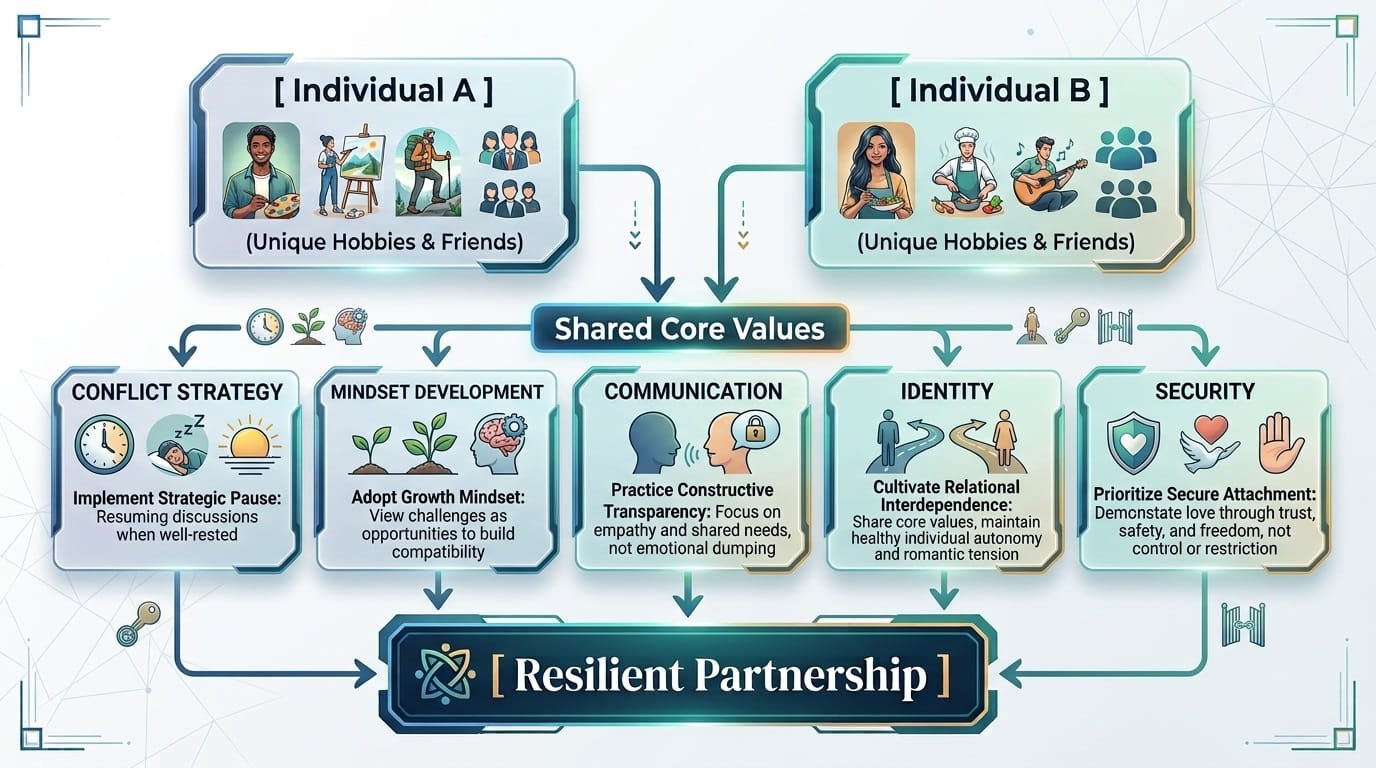
Choose the Right Time
Conflict rarely ends well when one partner is exhausted, stressed, or distracted.
Sometimes taking a short break allows emotions to settle.
The goal isn’t avoiding the conversation.
It’s having it when both people can participate calmly.
Replace Blame with Curiosity
Instead of assuming negative intentions, become curious.
Ask questions like:
- “Can you help me understand what you were thinking?”
- “What did you need in that moment?”
- “How did you experience this?”
Curiosity builds connection.
Blame builds walls.
Create Solutions Together
Once both partners feel heard, brainstorm solutions together.
Rather than demanding change, ask:
“What can we both do differently next time?”
Shared responsibility strengthens teamwork.
When Professional Help Can Make a Difference
If recurring arguments continue despite your efforts, seeking couples therapy can provide practical tools and guidance.
In fact, many successful couples view counseling as preventive maintenance rather than a last resort.
A qualified therapist can identify hidden communication patterns, uncover emotional triggers, and teach healthier conflict resolution skills.
Getting help early often prevents small issues from becoming permanent sources of resentment.
Healthy Relationships Still Have Conflict
One of the biggest myths about love is that happy couples never argue.
The reality is quite different.
Strong relationships experience conflict too.
The difference is that healthy couples learn how to repair after disagreements.
They apologize sincerely.
They listen with empathy.
They take responsibility.
Most importantly, they understand that conflict is an opportunity to know each other more deeply—not a sign that the relationship is failing.
Final Thoughts
If you and your partner keep having the same argument, don’t assume your relationship is broken.
Repeated conflict is often a signal that an important emotional need hasn’t been fully understood or addressed.
Instead of focusing only on the disagreement itself, look beneath the surface. Ask what emotions, expectations, or fears are driving the conversation. Replace blame with empathy, defensiveness with curiosity, and competition with teamwork.
Healthy relationships aren’t built by avoiding conflict—they’re built by learning how to navigate it with patience, respect, and compassion.
When couples stop trying to win arguments and start trying to understand each other, even the most repetitive disagreements can become stepping stones toward deeper trust, stronger communication, and lasting emotional intimacy.