



Introduction
Many people struggle with how to ask for space in a relationship without hurting their partner. Space is not rejection — it is a healthy way to recharge emotionally, reduce stress, and strengthen the bond. Knowing how to express your needs respectfully ensures that your request supports the relationship instead of damaging it.
Why Asking for Space Is Important
Asking for space in a relationship allows both partners to:
– Maintain individuality
– Reduce emotional pressure
– Prevent conflicts
– Encourage personal growth
When communicated properly, space supports trust, balance, and long-term happiness.
Signs You May Need Space
You might need some space if you notice:
– Feeling emotionally overwhelmed
– Increased irritation or conflicts
– Lack of personal time
– Mental or physical exhaustion
– Losing interest in hobbies
These signs are natural and do not mean your relationship is failing.
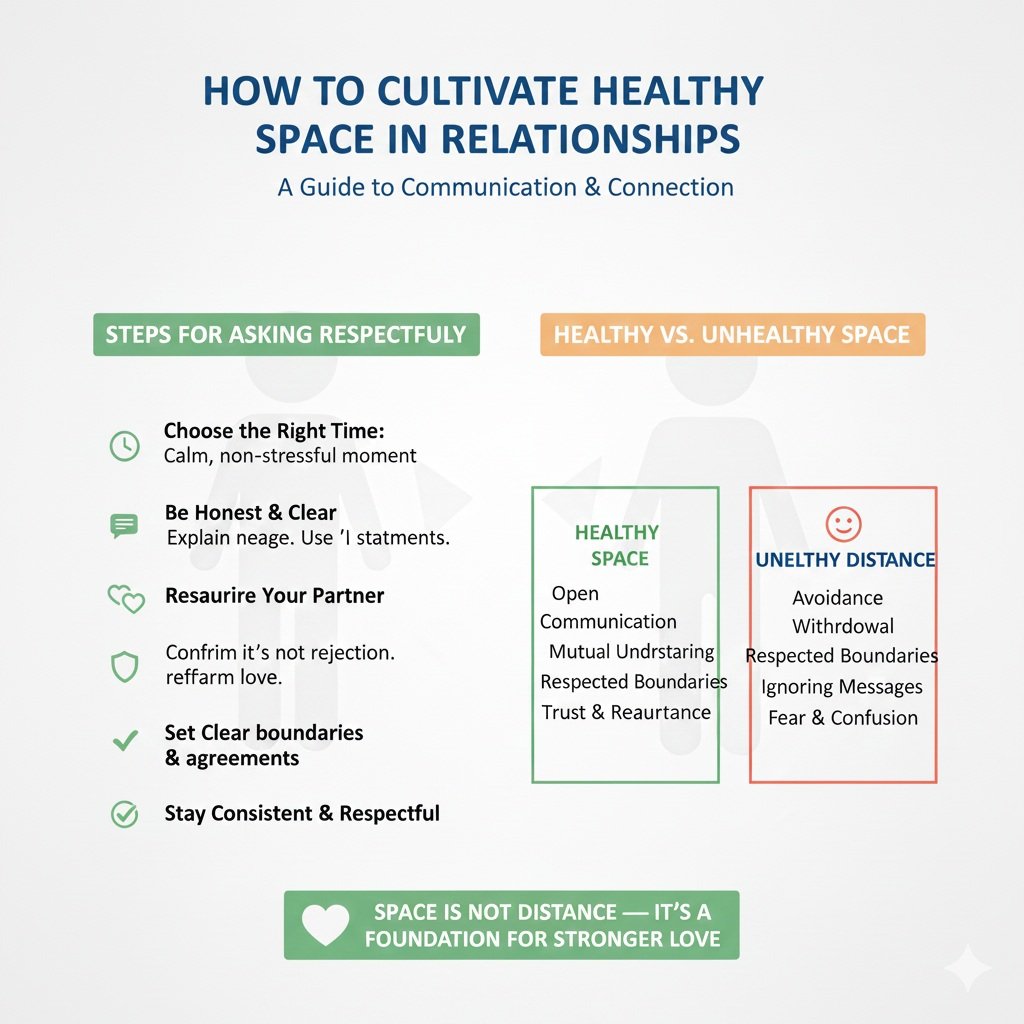
How to ask for space in a relationship without hurting him/her
It is one of the most common anxieties in relationships: how do you ask for time alone without making your partner feel rejected, unloved, or worried that the relationship is ending?
The truth is, space is not rejection—it’s maintenance. Taking time for yourself is a healthy way to recharge, maintain your individuality, and ultimately bring your best self back into the relationship.
Here is a step-by-step guide on how to respectfully and clearly ask for space while reassuring your partner and strengthening your bond.
1. Choose the Right Time
Timing is crucial. Your partner is more likely to react negatively if they are stressed, tired, or if you bring it up during an existing argument.
-
Avoid Stressful Moments: Never bring this up during a fight, immediately after a disagreement, or when your partner is rushing out the door.
-
Opt for Calm: Choose a time when you are both relaxed and have time for a full, uninterrupted conversation (e.g., after dinner on a quiet evening).
-
Set the Tone: Begin the conversation casually and with affection, emphasizing that this is a conversation about us, not a problem with them.
2. Lead with Reassurance, Not Just the Request
Your partner’s biggest fear is that you are pulling away permanently. You must address this fear immediately by emphasizing that this is about you needing a refresh, not about them being the cause of stress.
Avoid This (Focuses on them) |
Say This Instead (Focuses on your need) |
| “I need space because we’re spending too much time together.” | “I love our time together, and I want to keep our connection strong. To do that, I need some time to recharge my personal energy.” |
| “I need to get away from you for a while.” | “This has nothing to do with you or the relationship. I’m feeling overwhelmed/stressed lately, and a little alone time helps me clear my mind.” |
3. Be Clear and Specific About Your Needs
The ambiguity of “I need space” is what causes fear and anxiety. Define what “space” means to you so your partner isn’t left guessing or worrying.
✅ Define the Scope and Duration:
-
Time Frame: Is it a few hours, an afternoon, a full day, or a weekend?
-
Example: “I’d like to have Saturday afternoon just for myself to go hiking.”
-
-
Location: Is it being alone in the house, or physically leaving?
-
Example: “I’m going to spend the next two evenings reading in the spare room, but I’ll join you for dinner.”
-
✅ Define Communication Boundaries:
If you are requesting a longer period (like a day), reassure them by setting boundaries for connection.
Boundary |
Example Script |
| Check-Ins | “I’ll text you a quick ‘good morning’ and ‘good night’ just so you know I’m thinking of you.” |
| Emergencies | “If you need something urgent, please call. Otherwise, I’m going to put my phone away for a while.” |
| Re-Entry | “When I get back tonight, can we cuddle on the couch and tell each other about our days?” |
4. Listen to Their Feelings and Validate Them
Your partner might still feel hurt, even with the best explanation. Be prepared for a reaction and treat it with patience.
-
Validate their Emotion: Don’t dismiss their feelings. Acknowledge the courage it took for them to be vulnerable.
-
Example: “I understand that hearing this makes you feel uneasy, and I’m sorry if I didn’t communicate this sooner.”
-
-
Reaffirm Commitment: End the conversation by reaffirming your love and commitment.
-
Example: “I’m asking for this space precisely because I value you and our relationship so much. I want to be the best partner I can be for you.”
-
5. Respect the Boundaries You Set
Consistency builds trust. If you promise to check in, do it. If you asked for space to read, don’t use that time to flirt with others (or do anything else that breaks implicit trust).
When the time period is over, make sure to enthusiastically reconnect. This shows your partner that the space was beneficial and they have nothing to fear next time you need it.

What Healthy Space Looks Like
Healthy Space:
– Open communication
– Mutual understanding
– Respect for boundaries
– Love and reassurance
Unhealthy Distance:
– Avoiding conversations
– Withdrawing emotionally
– Ignoring messages
– Creating fear or confusion
Understanding this difference is key to maintaining a healthy connection.
How to Support Your Partner During This Time
If your partner needs space:
– Listen without judgment
– Avoid overthinking
– Continue focusing on your own routine
– Keep communication calm and respectful
Supporting space shows emotional maturity and deepens the relationship.
Conclusion
Asking for space in a relationship is healthy, normal, and beneficial. When approached with honesty, clarity, and respect, it can strengthen trust, personal growth, and emotional harmony. Space is not distance — it’s a way to create balance and a stronger foundation for love.